Monday, July 28, 2025

The Forgotten Pharaoh of Ancient Egypt: Unveiling the Legacy of Sobekneferu


The Forgotten Pharaoh of Ancient Egypt

When we think of ancient Egypt, names like Cleopatra and Nefertiti often come to mind — powerful women immortalized in marble, myth, and modern cinema. But what about the pharaohs whose stories have been buried beneath the sands of time? In our latest episode of the King Cam’s Ujumbe Podcast, we kick off the “Queens of the South” series on Youtube with a discussion on one of the most overlooked yet powerful rulers in African history Sobekneferu, the first recorded female pharaoh of Egypt.

Let’s break down the truths, myths, and strategic brilliance of the queens who ruled with grace, power, and divine authority.

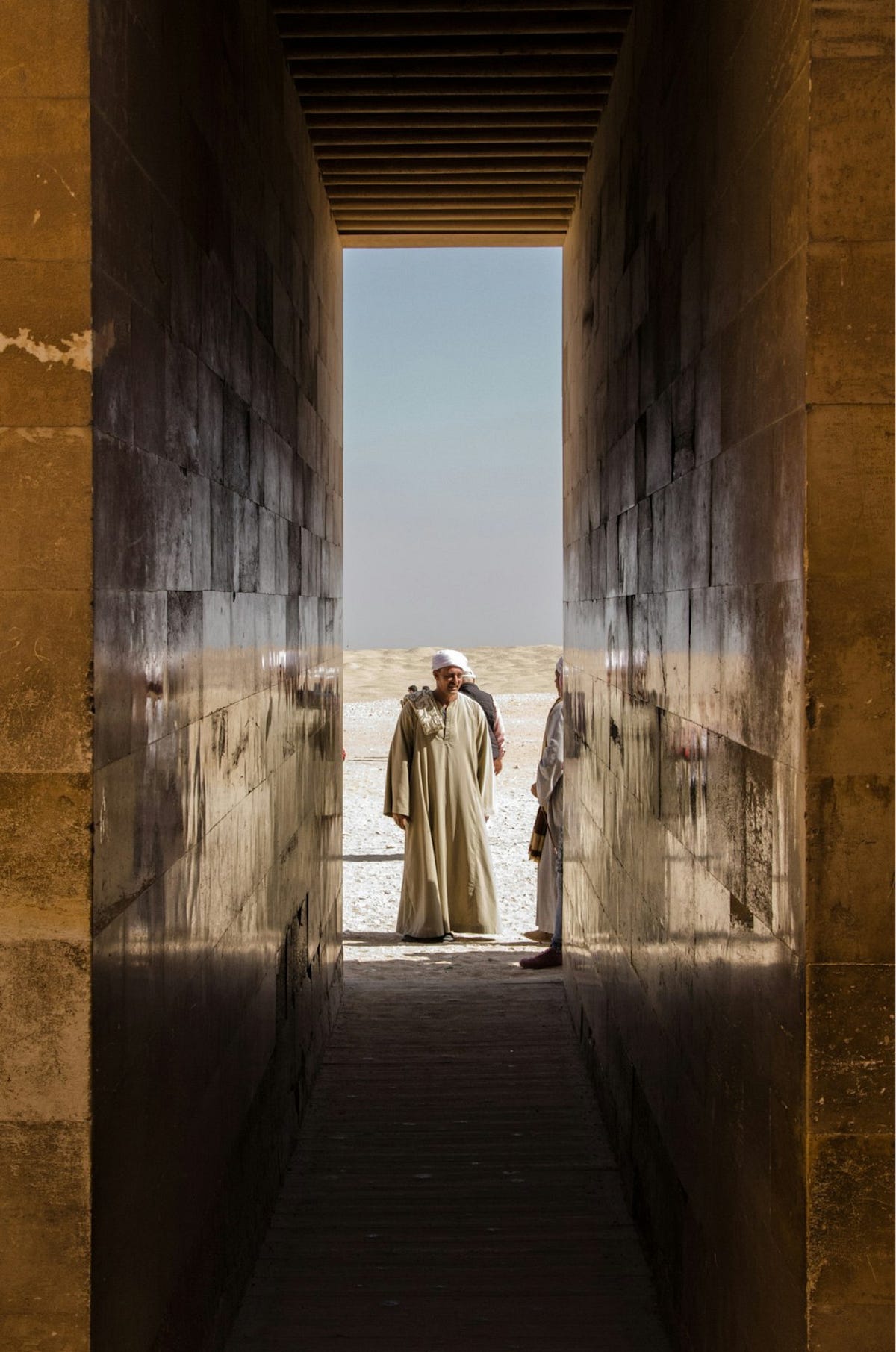
Photo by Simon Berger on Unsplash

A New Series Begins: Queens of the South

We’ve talked about the great male rulers of Kemet — Thutmose III, Ramesses the Great, and Akhenaten. But now it’s time to focus on the sisters. This spring, we’re launching a season-long journey into the lives of the queens who defied expectations and claimed power in the ancient Nile Valley.

Our first queen? Sobekneferu — the “Goddess of the Seven Stars,” the crocodile queen of divine balance.
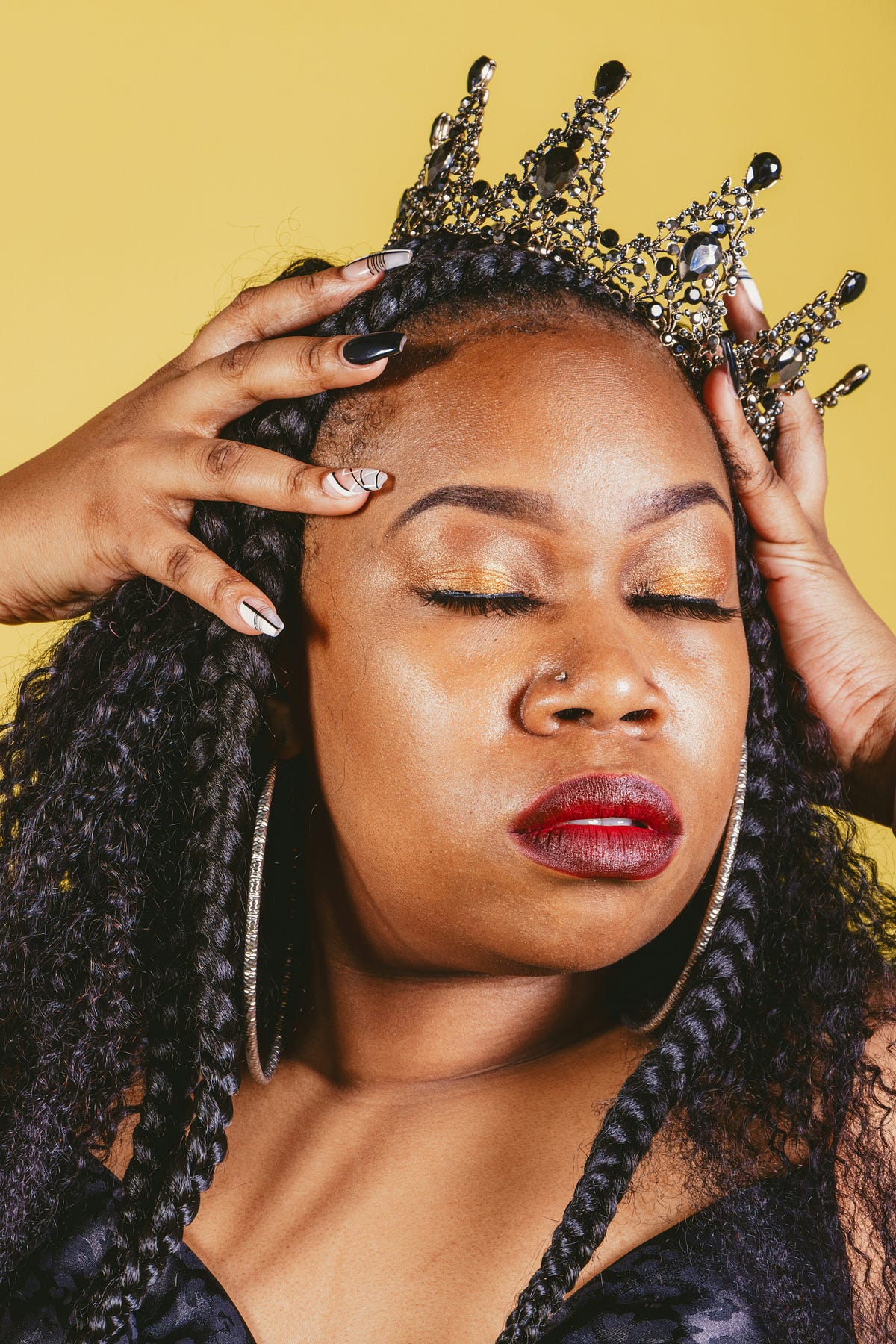

Photo by Quantumn on Unsplash

From the Pages of History: Andrew Collins’ Groundbreaking Work

Our discussion is inspired by Andrew Collins’ book, “The First Female Pharaoh: Sobekneferu, Goddess of the Seven Stars.” Though well-researched, it carries a Eurocentric lens at times. Collins opens by examining why female pharaohs were so rare in Egypt’s history and what societal structures limited their rise.

But we ask — were those restrictions truly Egyptian? Or were they retrofitted later by Greek, Roman, and European interpreters?


Photo by Siednji Leon on Unsplash

Cleopatra Aint Her

Collins starts with Cleopatra, but King Cam is clear: “She ain’t her.” While Cleopatra was strategic — leveraging her relationships with Julius Caesar and Mark Antony — her legacy is clouded by Roman propaganda and Hollywood fantasies. That Elizabeth Taylor portrayal? Let’s be honest — it couldn’t survive the African sun.


Photo by Ibrahima Toure on Unsplash

Nefertiti: The Hidden Queen

We then shift to Nefertiti, the iconic queen who helped usher in a religious revolution alongside Akhenaten. Their 17-year reign challenged the old gods and introduced a solar monotheism that rattled Egypt’s spiritual foundations.

But did you know that the most famous bust of Nefertiti — the one in museums and textbooks — is based on a German model and likely inauthentic? The real image shows an unmistakably African queen, and speculation continues about her fate — she vanished from the record before King Tut took the throne. And no, she was not his mother.


Hatshepsut: The Woman Who Became King

Next, we explore Hatshepsut, daughter of Thutmose I, who ruled not just as queen but as Pharaoh. After her husband’s death, she stepped in as regent for her stepson and quickly claimed the throne.

To secure her legitimacy in a male-dominated society, she adopted full male regalia — the double crown, the false beard, and all symbols of pharaonic power. Her motives were clear:

Political Stability
Religious Symbolism
Strategic Legitimacy

She expanded trade to distant lands like Punt -Ta-Neter (or “God’s Land”), took on massive building projects, and was remembered for balancing divine authority with practical governance.


Rewriting the Patriarchal Narrative

Throughout the episode, we challenge the common claim that ancient Egypt was strictly patriarchal. The evidence? Countless statues and reliefs showing queens sitting beside their kings — not behind them. Divine balance (Ma’at) required the feminine and the masculine. A true pharaoh was not just a king but an intermediary between the gods and the people — and many learned that role at their mother’s feet.


Photo by Wisdom Praize on Unsplash

Enter Sobekneferu: The Forgotten Pharaoh

Her reign — though short, lasting just under four years — was powerful and symbolic. She ruled Upper and Lower Egypt as “Lady of the Two Lands” and bore sacred names that connected her to the gods:

Meri-t-ra (Beloved of Ra)
Beket Ra (Daughter of Ra)
And importantly, devoted to Sobek, the crocodile god of strength, protection, and fertility.

She wasn’t born in Waset (Thebes) like many royal predecessors but rose to power in the Faiyum region, aligning herself with local traditions and initiating major architectural projects. Her devotion to Sobek signified a return to indigenous power structures — a spiritual and political move.


Her Name Was Her Power

Ancient Egyptians had multiple sacred names — each representing a role, a divine function. Sebec Neferu’s names were carefully chosen to:

Legitimize her lineage (her father and brother were kings)
Anchor her rule in divine will
Connect her to the central cults of the time (Heliopolis, Memphis, and the Faiyum)

Names were not labels — they were living affirmations of spiritual authority.


Photo by Elena Mozhvilo on Unsplash

A Legacy of Divine Balance

Even in a male-dominated role, Sebec Neferu’s reign suggests a queen who understood the importance of Ma’at — truth, balance, and justice. She governed during a transitional period after the 12th Dynasty and held the kingdom together. Her use of crocodile iconography wasn’t random — it reflected cosmic order, divine wrath, and protective force.

She wasn’t just the “first female pharaoh” — she was a cosmic ruler, strategically reclaiming power through symbolism, devotion, and spiritual science.


Photo by Shawn ‎ on Unsplash

The Journey Continues…

This is only the beginning. In upcoming episodes of King Cam’s Ujumbe Podcast, we’ll continue exploring ancient queens, the political dynamics they navigated, and their esoteric legacies. We’ll also address the real “King of the North and South” — because Kush and Nubia have entered the conversation.

Subscribe, share, and dive deeper with us.

Talk to you later

🎧 Listen to the full episode here:
 ðŸ‘‰ Exploring the Forgotten Pharaohs of Ancient Egypt

📚 Want to go further?
 Check out Andrew Collins’ The First Female Pharaoh and dig into ancient names, temple rituals, and divine power politics.

Check out these books and gifts on Amazon!

Thanks for reading! As an Amazon Associate, I get a small commission for each purchase you make after you click on my link and you shop, but it doesn’t cost you anything extra. Please use my links below!


Interested in exploring the depths of history, education, or religion through engaging articles? I’d love to contribute my expertise as a freelance writer.
Feel free to reach out at kingcamujumbe@gmail.com for collaborations or inquiries. Let’s create something impactful together!

Thursday, July 24, 2025

Flying a Kite Isn’t Hard: Getting it off the Ground Is


Flying a Kite Isn’t Hard

On Easter Sunday afternoon, my youngest son and I relived a childhood memory or mine. We flew a kite. While attempting to get it off the ground. A fond memory resurfaced.

In the springtime when the wind was high. My Dad used to take my brother, my sister and I to the local Middle School field. The name of the school was E.B.Comstock Middle School.

He would take us to the Skaggs Alpha Beta or Tom Thumb to get a kite. I remembered how colorful the kites were. I remembered how excited we were.

Then it was time to take the field. Upon the multiple attempts we finally got them off the ground.

After a little time and effort. Joshua and I finally got it off the ground. It wasn’t until years later I realized how fun and challenging it is to fly a kite. Here’s a few things I’ve learned while flying a kite.

Flying a kite isn’t hard.
Getting it off the ground is.

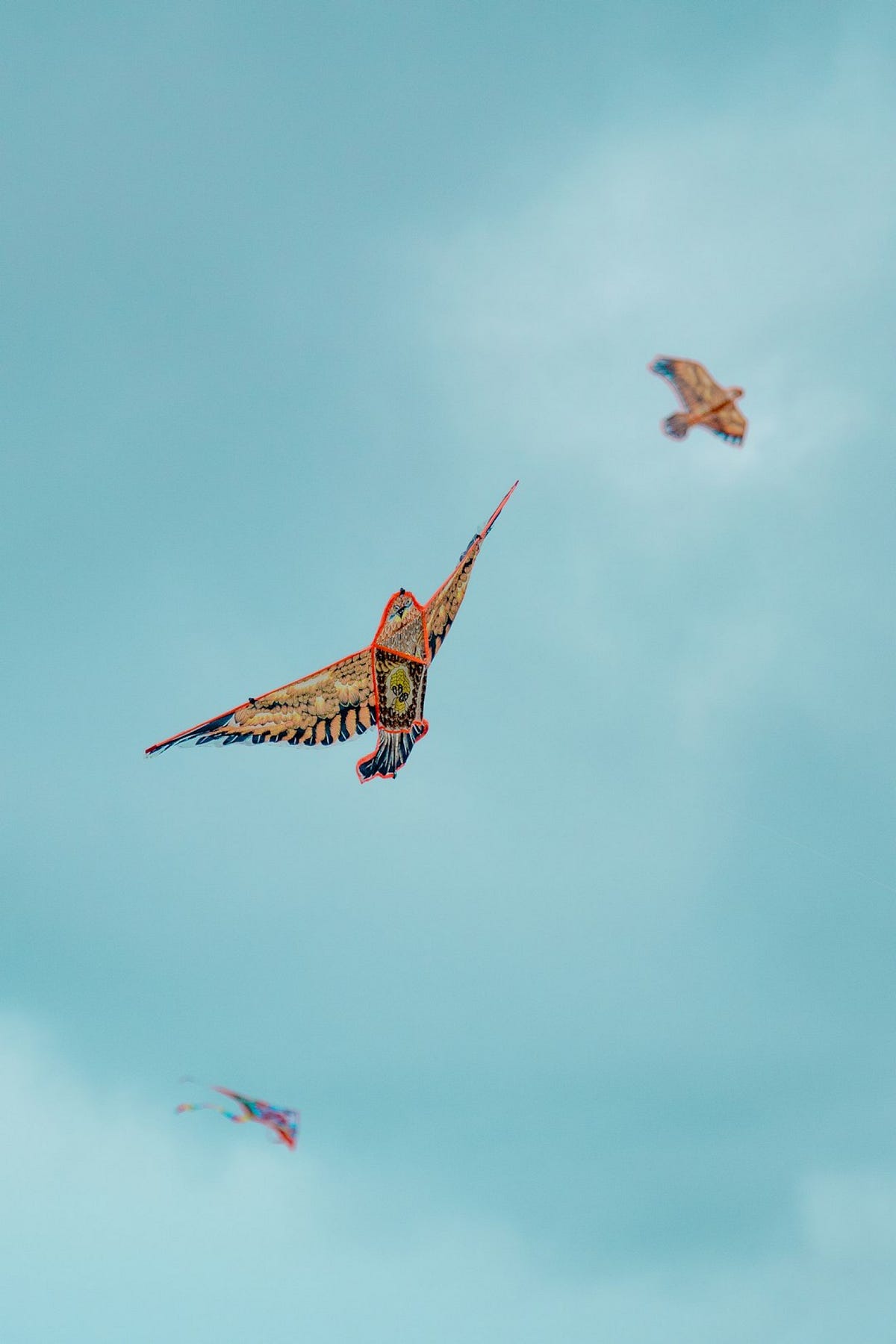
Photo by Bill Fairs on Unsplash

Don’t do what everyone else is doing

When everyone else is running trying to get space and altitude. They tried throwing it up. But two things happened

  1. They got tired
  2. Their kite didn’t go as high

What we did was wait

We prepared for the right time. We waited for the right moment to let the kite fly itself.

Sometimes we look around and see everyone else:

Running
Always on the go
Always comparing themselves with others
Multitasking

They going places but their kite of life isn’t as high as it can be.

Why?

They were impatient. Sadly some give up, and put their kites down.

To try something else.
To do something else.
To go with the next trend.

In the end it was just my son and I. We were determined not to give up.

Photo by Saffu on Unsplash

After a few minutes of coaching. After a few minutes of winding the line. After a few minutes of trial and error. The wind took our kite. Our kite was finally off the ground. All we needed was a little wind, and a little lift. Sometimes all you need to get your kite off the ground is a little wind, and a little lift.

That wind maybe a song.
Wind might be good friends and family.
Wind maybe the seeking out opportunities
Lift maybe encouragement.
Or even rest

Once the kite got going. I gave Joshua the reigns and I watched. I told him about when my Dad used to go and fly kites in the spring. We enjoyed that moment. I think he took a picture. Like a lot of our youth. They move on. After a while, it was just me enjoying the kite and my memories.

Talk to you later…

  • Photo made by author…

Check out these books and gifts on Amazon!

Thanks for reading! As an Amazon Associate, I get a small commission for each purchase you make after you click on my link and you shop, but it doesn’t cost you anything extra. Please use my links below!

Interested in exploring the depths of history, education, or religion through engaging articles? I’d love to contribute my expertise as a freelance writer.
Feel free to reach out at kingcamujumbe@gmail.com for collaborations or inquiries. Let’s create something impactful together!

Wednesday, July 23, 2025

Unveiling the Mysteries

I usually don’t do this on my podcast. But I felt it was necessary to add value to the discussion. For thousands of years, the Great Sphinx of Giza and the pyramids have stood as silent sentinels, guarding secrets that continue to baffle historians, archaeologists, and mystics alike. But could there be undiscovered chambers, lost knowledge, and hidden tunnels beneath these iconic structures?

Some believe that beneath the Sphinx lies the Hall of Records, a legendary underground library said to contain the wisdom of past civilizations. Others point to recent archaeological scans suggesting that hidden rooms and passageways may still remain unexplored. If true, these discoveries could change everything we thought we knew about ancient Egypt.

Let’s talk about it.


Photo by Alex Azabache on Unsplash

Secret Chambers Beneath the Sphinx: What Lies Below?

One of the most intriguing questions surrounding the Sphinx is whether hidden chambers exist beneath it. Ancient texts and modern ground-penetrating radar scans have detected anomalies beneath the structure, hinting at undiscovered rooms or tunnels.

In the 1990s, researchers using ground-penetrating radar identified hollow spaces beneath the Sphinx.
Some claim these could be sealed-off tombs, storage chambers, or even passageways leading to an underground network.
Despite these findings, access to excavation has been limited, fueling theories of suppressed discoveries.

Could these hidden rooms hold ancient relics, sacred texts, or evidence of a lost civilization?


Photo by Jonathan Francisca on Unsplash

The Hall of Records — Myth or Reality?

According to legend, the Hall of Records is an underground library beneath the Sphinx, containing sacred knowledge, lost history, and advanced technology from a forgotten age.

The Ancient Egyptian priest Manetho and the Greek philosopher Plato both referenced the existence of hidden archives.
Some believe the Hall of Records contains records from Atlantis or even an earlier advanced civilization.
The Edgar Cayce Prophecies (early 20th century) predicted that the Hall of Records would be discovered in the 21st century, changing human history forever.

If such a library exists, its contents could revolutionize our understanding of ancient Egypt and the origins of human civilization.


Photo by FotoFlo on Unsplash

Mystery Schools & Initiation Rituals — The Path to Enlightenment

Beyond physical chambers, ancient Egyptian mystery schools held sacred initiations in underground halls. These initiations symbolized the soul’s journey through the afterlife (Duat) and were designed to impart hidden wisdom. After some research I learned 

The Priesthood of Thoth, Amun, and Ptah conducted life-changing trials in underground labyrinths.
These rites were meant to awaken higher consciousness and spiritual transformation.
Many initiates were led through simulated death experiences before emerging as enlightened beings.

This led me to more questions. 

Could these underground halls still exist beneath the pyramids? 
If so, what secrets of spiritual ascension remain undiscovered?

The Temple of Isis — Gateway to Divine Knowledge

One of the most revered centers of learning in ancient Egypt was the Temple of Isis. This sacred temple played a significant role in mystical teachings, initiations, and divine wisdom.

The teachings of Isis were centered around rebirth, transformation, and cosmic knowledge
Many scholars believe the temple held esoteric texts that detailed hidden truths about the universe
If parts of this temple still remain undiscovered, they could provide missing pieces of Egypt’s hidden history.

Could the teachings from this sacred site offer insights that modern science has yet to understand?

Modern Discoveries & Forbidden Archaeology: What Are We Not Being Told?

Despite groundbreaking technology, some believe that key discoveries are being withheld from the public. Recent scans have suggested:

Unmapped tunnels beneath the Great Pyramid that lead to unknown locations.
Underground anomalies beneath the Sphinx, yet full excavations remain restricted.
Theories that ancient Egyptian knowledge was far more advanced than mainstream history acknowledges.

If these secrets are finally uncovered, they could completely rewrite history.

Could We Be on the Verge of a Breakthrough?

The more we explore Egypt’s ancient wonders, the more we realize how much we still don’t know. Are we on the brink of uncovering a lost chapter of human history?

With modern technology, increased exploration, and growing public interest, we may soon have answers to these age-old mysteries

Talk to you later

Check out these books and gifts on Amazon!

Thanks for reading! As an Amazon Associate, I get a small commission for each purchase you make after you click on my link and you shop, but it doesn’t cost you anything extra. Please use my links below!

Check out the full video

Interested in exploring the depths of history, education, or religion through engaging articles? I’d love to contribute my expertise as a freelance writer.
Feel free to reach out at kingcamujumbe@gmail.com for collaborations or inquiries. Let’s create something impactful together!

Have You Been Hurt? When Spiritual Paralysis Feels Permanent

  A brief reflection on different kinds of paralysis, and why your hurt qualifies you for healing W e talk a lot about faith. About believin...