
Sobekneferu the Forgotten Queen
History often hides its most intriguing figures in the margins. And if you know me, you already know I like to go digging in those margins, pulling out the names and stories that were deliberately left behind. One of those names is Sobekneferu — a queen who refused to stay in the shadows, even though later scribes tried their hardest to erase her.
When most people think about women rulers of ancient Egypt, they jump to Cleopatra or Hatshepsut. But Sobekneferu? She’s the disruptor that history tried to silence. The first woman to wear the double crown outright, the last ruler of Egypt’s 12th Dynasty, and a queen who found herself standing at the crossroads of politics, prophecy, and priesthood. She wasn’t just fighting for her throne — she was battling for Egypt’s soul.
This isn’t just about dates and dynasties. It’s about power, memory, and the war over who gets to define truth. And when you start looking closer, Sobekneferu’s story feels less like a distant history lesson and more like a mirror held up to our own times.
Let’s walk into her world.
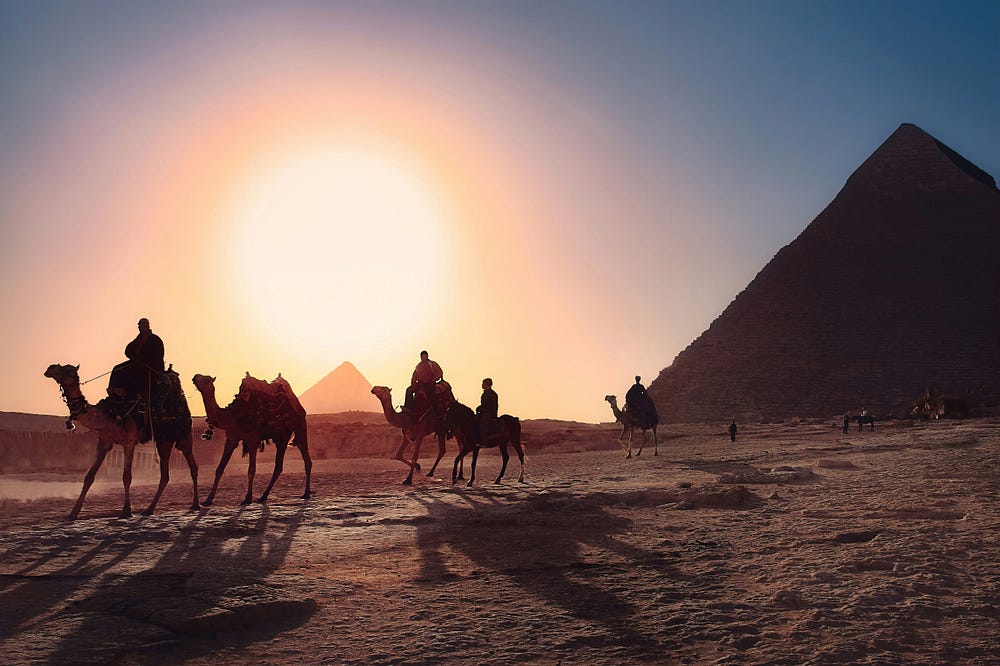
Setting the Stage: Egypt in the 12th Dynasty
The 12th Dynasty (c. 1991–1802 BCE) is remembered as one of ancient Egypt’s golden ages. The kings of this dynasty rebuilt stability after chaos, expanded borders, raised pyramids and temples, and developed an advanced bureaucracy. On the surface, Egypt looked strong, unified, prosperous.
But beneath that surface, something else was stirring.
The priesthoods — the spiritual backbone of Egypt — weren’t unified. Competing theological centers were vying for dominance:
- The priests of Amun at Thebes were rising, tying kingship to Amun-Re, the fusion of the hidden god Amun and the solar deity Re.
- The priests of Sobek in the Faiyum kept alive older traditions of crocodile gods, water cults, and fertility linked to the Nile flood.
- The priests of Heliopolis held fast to cosmic star-science, the Ennead, and solar supremacy.
- The priests of Ptah at Memphis preserved traditions of creation, artistry, and craft.
These weren’t just theological debates. In Egypt, theology was politics. Whoever controlled the gods controlled kingship, resources, and legitimacy itself.
Into this world stepped Sobekneferu — daughter of Pharaoh Amenemhat III, likely sister to Amenemhat IV, and eventually the first woman to reign with the double crown.

A Queen in the Double Crown
Sobekneferu’s claim to fame is simple but revolutionary: she was the first woman in Egyptian history confirmed to wear the full regalia of pharaoh. Not just a queen mother, not a regent behind a boy-king, not a consort wielding influence — but pharaoh in her own name.
Her royal titles fused masculine and feminine elements. She took the throne name Sobekkare (“Sobek is the Ka of Re”), aligning herself with both the crocodile god of the waters and the solar order. At the same time, her birth name Sobekneferu (“The beauty of Sobek”) tied her directly to the Faiyum cult of Sobek, the primal crocodile deity linked to fertility, floodwaters, and cosmic renewal.
This was bold. Sobekneferu wasn’t trying to fit into a mold. She was creating her own. By embracing both masculine and feminine in her titulary, she was saying: divine kingship transcends gender. The throne is cosmic, not merely male.
But not everyone celebrated.
Later records erased her. The Turin King List skips her. The Abydos King List pretends she never existed. Her monuments were mutilated, her name chiseled out. This wasn’t sloppy record-keeping — it was a deliberate erasure. Sobekneferu’s legitimacy was too dangerous for the priestly establishment.

Prophecies, Betrayal, and the Shadow of Joseph
Here’s where things get even more layered. The podcast that inspired this exploration points out a striking tradition: that the biblical Joseph — the dream-interpreter who rose to power in Egypt — may have entered the Egyptian story during Sobekneferu’s time.
Now, whether or not that’s historically precise, it’s fascinating. Because Joseph’s story represents something bigger: the intrusion of prophetic visions and foreign wisdom into Egypt’s spiritual and political systems.
Joseph, the dreamer, embodied a new spiritual orientation: truth revealed through prophecy, visions, and one-on-one divine communication. Egypt’s older traditions, by contrast, emphasized cyclical cosmic order — the Nile flood, the stars’ movement, the eternal return.
Imagine being a priest of Amun, trained for decades in star-science and temple ritual, and suddenly this foreign official is telling the king that dreams are the highest revelation. That would feel like heresy.
Sobekneferu stood right in the middle of this clash. Her devotion to Sobek and to stellar traditions placed her against the rising solar theology of Heliopolis, which increasingly presented the sun as the supreme god. With Joseph’s influence in the background — whether myth or memory — the priesthoods saw their authority threatened.
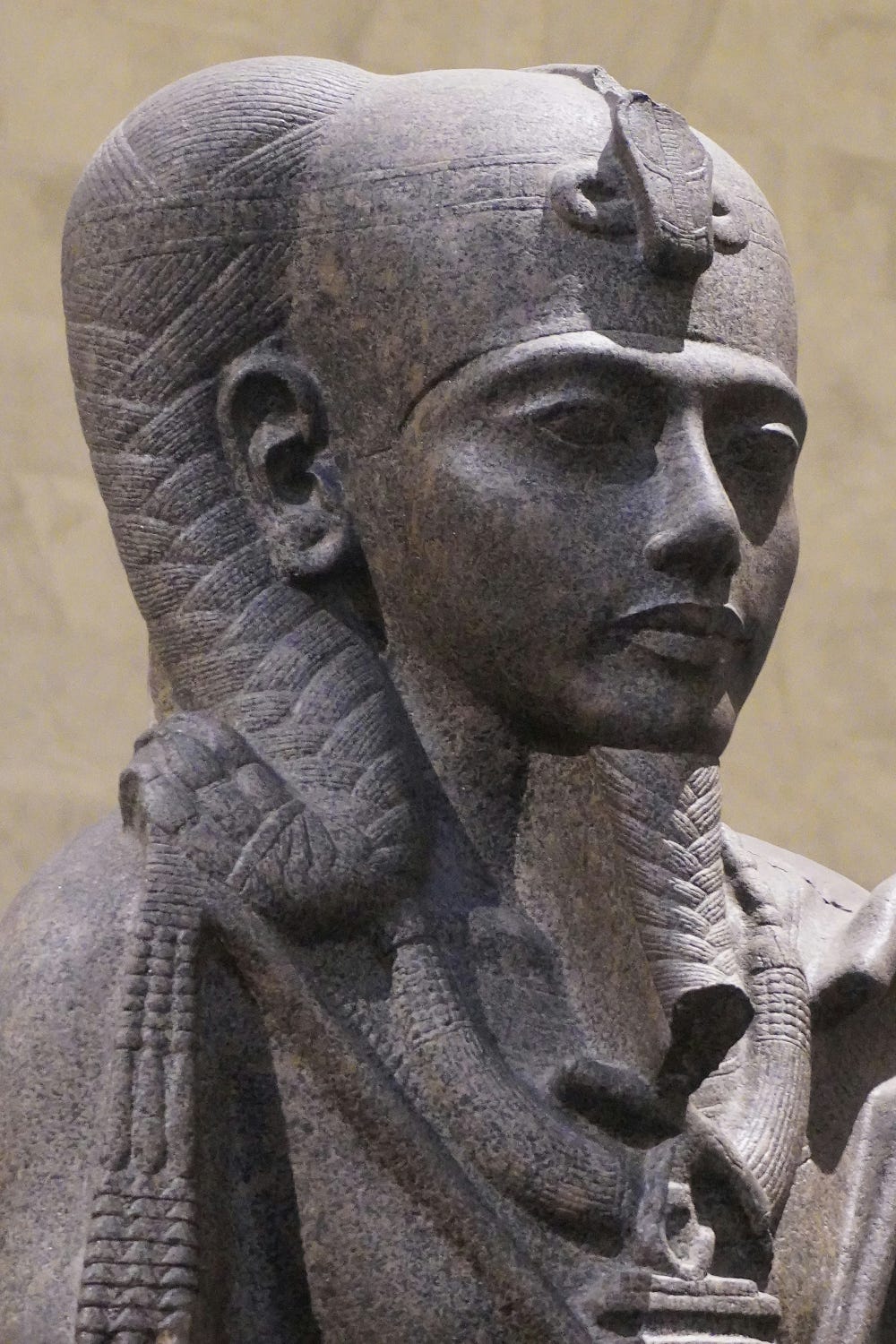
The Priestly Battleground
To really grasp Sobekneferu’s struggle, you have to understand the priestly factions she faced:
- Priests of Amun (Thebes): Rapidly consolidating power by fusing the hidden god Amun with solar Re. Their theology favored kingship as a solar office, centered on a male sun-ruler.
- Priests of Sobek (Faiyum): Rooted in older traditions of fertility, crocodiles, and the watery chaos from which all life emerged. Their power base was Sobekneferu’s natural constituency.
- Priests of Heliopolis: Scholars, astronomers, scribes. They studied the stars, but paradoxically also pushed solar supremacy, anchoring kingship to Re’s cosmic order.
- Priests of Ptah (Memphis): Custodians of creation-by-craft, bridging divine artistry and kingship.
The most powerful of these by Sobekneferu’s time were the Heliopolitans and the Theban Amun priesthood. They had the resources, the training schools, the sacred texts, and hereditary power structures. They were gatekeepers of cosmic order itself.
So when Sobekneferu threw her weight behind Sobek, the waters, and the stars, she wasn’t just making a theological choice. She was mounting a rebellion against the centralizing solar priesthood.

Cosmic Conflict: Stars vs. the Sun
At the heart of Sobekneferu’s reign lies a cosmic debate.
Older African traditions revered the stars as the eternal ones — unsetting, unchanging, ever-present. The circumpolar stars were called the Imperishables, the destination of kings after death. Temples were aligned with Orion, Sirius, and the Milky Way. Time itself was mapped by the stars.
But by the end of the 12th Dynasty, solar theology was on the rise. The priests of Heliopolis and Thebes argued: it is the sun that gives order. The sun that gives legitimacy. The sun that embodies divine kingship.
Sobekneferu’s devotion to Sobek, to the Nile, and to stellar cults was an outright rejection of this monopoly. She represented water, chaos, fertility, and cyclical renewal — not the linear, hierarchical power of the sun.
In other words, she wasn’t just a political rival. She was a cosmic rival.
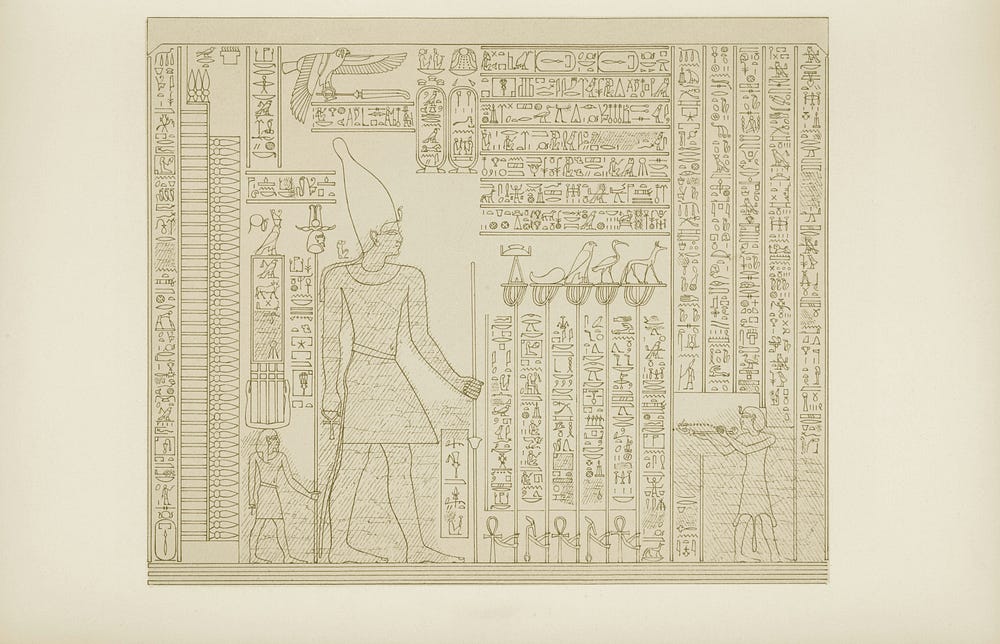
The Nile, Legitimacy, and Accusations
In Egypt, no king ruled alone. Their legitimacy lived and died by the Nile flood.
Each year, the river had to rise and flood the fields. If it didn’t, famine followed. And when famine came, people didn’t just blame the weather — they blamed the pharaoh. The king was the rain-maker, the guarantor of Ma’at, the cosmic balance.
During Sobekneferu’s reign, tradition says the Nile’s flood diminished. Whether this was due to climate cycles, poor record-keeping, or pure propaganda, it didn’t matter. Her enemies seized the moment.
They declared: “Sobekneferu has failed. Her devotion to crocodile gods has angered the heavens. The flood has withdrawn. Egypt suffers because of her heresy.”
Think about that. A natural cycle was weaponized to discredit a woman ruler. Priests turned the river itself into evidence against her. That’s not just politics — that’s spiritual warfare.
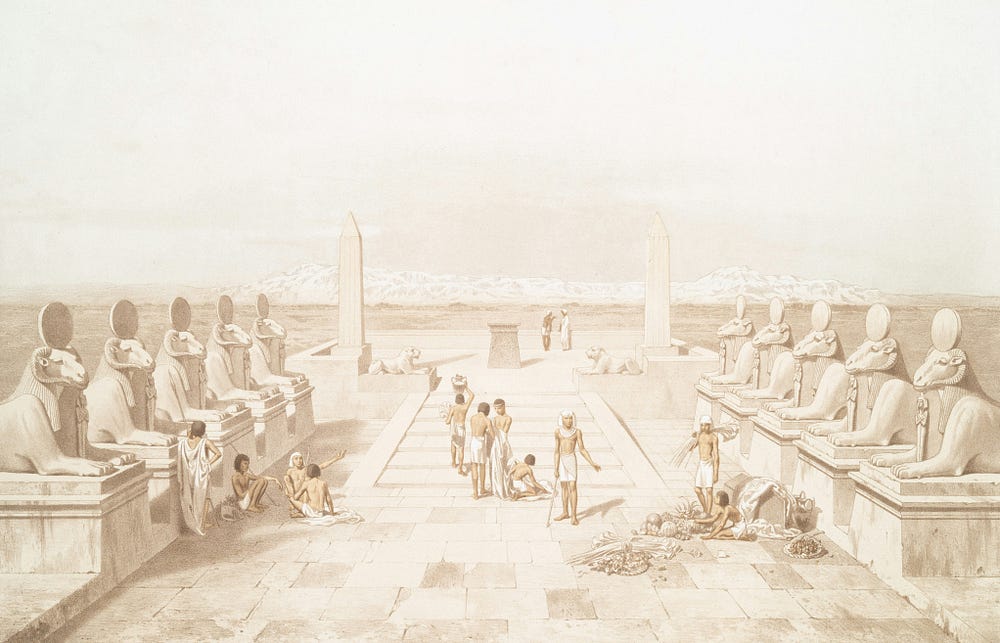
Spiritual Science: The Ennead as a Ladder
To fully grasp Sobekneferu’s conflict, you have to look at the spiritual science of her time — especially the Ennead of Heliopolis.
The Ennead wasn’t just a list of gods. It was a cosmic map, a ladder of initiation:
- Atum — the undivided source, pure potential.
- Shu — breath, life-force.
- Tefnut — moisture, the fluidity of the soul.
- Geb and Nut — earth and sky, cosmic lovers separated to create space for life.
- Osiris and Isis — resurrection, magic, memory.
- Set — chaos, disruption, necessary conflict.
- Nephthys — hidden wisdom, the mysteries unseen.
This wasn’t abstract theology. It was initiation — the path every ruler was expected to walk to embody Ma’at.
But here’s the key: by the 12th Dynasty’s end, the priesthood insisted that this ladder culminated in a solar pharaoh — male, singular, radiating like the sun.
Sobekneferu disrupted that. Her very presence on the throne symbolized the return of feminine polarity in kingship. She wasn’t erasing the ladder — she was reminding everyone that balance, not monopoly, was the foundation of Ma’at.

The Calculated Erasure
Sobekneferu ruled only about four years. After her death, Egypt slipped into instability and the Second Intermediate Period. That’s when her erasure began.
The Turin King List skips her. The Abydos list pretends she didn’t exist. Her monuments were damaged. Her names chiseled out.
Why? Because her memory was dangerous.
If people remembered her, they might remember that women could hold the throne. They might remember that Egypt once balanced star, water, and crocodile traditions alongside solar theology. They might remember that prophecy, dreams, and feminine polarity had a place in divine kingship.
For the priests of Amun and Heliopolis, that memory had to be buried. So Sobekneferu became a ghost.

Beyond Stone: Writing in the Stars
But here’s the irony: Sobekneferu may have anticipated this. Unlike earlier kings who built pyramids or colossal temples, her monuments were modest. Some scholars suggest she wasn’t investing in stone at all.
Instead, she may have been investing in the stars.
If her legacy was tied to stellar traditions, then her true monument wasn’t carved in limestone. It was written in the heavens. And no chisel can erase Orion or Sirius. No priest can blot out the Milky Way.
In this sense, Sobekneferu was playing a long game. She knew her enemies could break stone. But the stars? They were beyond reach.
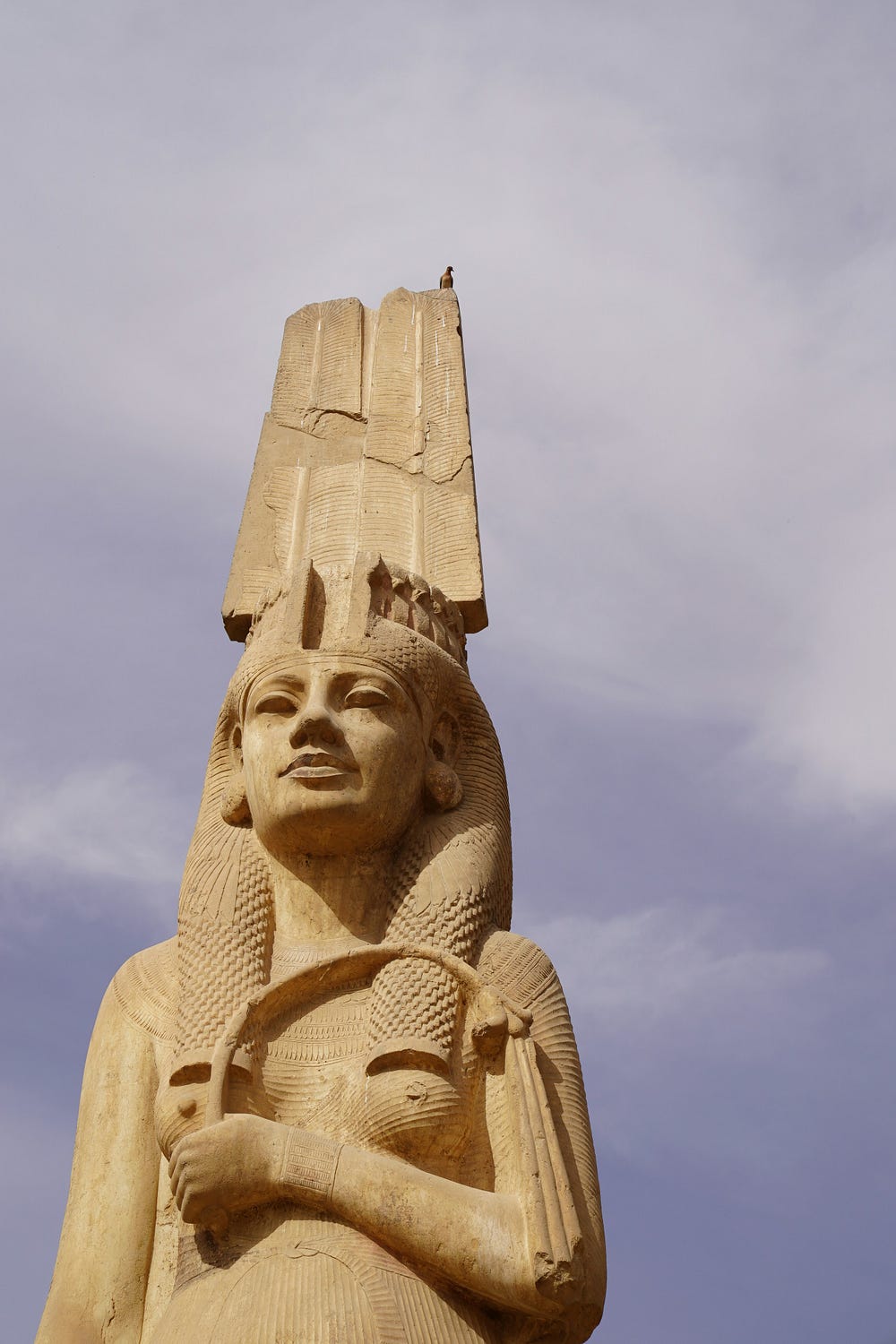
Sobekneferu’s Legacy
So who was Sobekneferu, really? Let’s sum it up:
- The last ruler of the 12th Dynasty, closing Egypt’s Middle Kingdom.
- The first confirmed woman pharaoh to wear the double crown.
- A queen who aligned herself with Sobek and stellar traditions, rejecting solar monopoly.
- A ruler caught in the crossfire of prophecy, priesthood, and bureaucracy — perhaps even linked to Joseph’s legendary story.
- A queen accused of failing the Nile, scapegoated by priests.
- A monarch deliberately erased from records, yet still remembered in whispers.
Her legacy reminds us: history isn’t just about who ruled. It’s about who controlled the narrative. Sobekneferu’s enemies erased her because memory is power. By silencing her, they hoped to silence a whole way of seeing the cosmos.

Lessons from the Last Queen
Sobekneferu’s story isn’t just ancient history. It speaks directly to us today.
Who decides what truths survive and which are erased?
What happens when women step into roles traditionally reserved for men?
How do spiritual traditions adapt — or resist — when faced with change?
Can legitimacy be measured by natural cycles, or is it always a construct of power?
These are questions as alive now as they were in 1800 BCE.
For me, Sobekneferu represents every visionary, every truth-teller, every woman who dares to stand against entrenched systems. She is what happens when cosmic balance collides with political monopoly. She is what happens when the water challenges the sun.

Conclusion: Echoes Across Time
Sobekneferu may have ruled only four years, but her legacy stretches across millennia. She embodies the tension between water and sun, stars and earth, feminine and masculine, tradition and change. She was erased, but not forgotten. Silenced, but not destroyed.
Her story is a reminder that history is not neutral. It’s a battleground. And sometimes, the most important truths are the ones written in the margins.
So when I say Sobekneferu’s light still shines, I’m not just being poetic. I mean it. She’s part of that long African tradition of women who carried both throne and temple, who kept cosmic balance alive even when the world turned against them.
And remembering her isn’t just about Egypt. It’s about reclaiming every voice that history tried to silence.
That’s the work we’re here to do.
Talk to you later.
🎧 Listen to the Full Episode
📺 Watch on YouTube
About the King Cam’s Ujumbe Podcast
The Podcast, hosted by King Cam (Marques D. Cameron Sr.), explores the hidden histories, spiritual traditions, and mystical wisdom of ancient Africa. Each episode uncovers forgotten knowledge and empowers listeners to connect with their ancestral heritage.
Check out these books and gifts on Amazon!
Thanks for reading! As an Amazon Associate, I get a small commission for each purchase you make after you click on my link and you shop, but it doesn’t cost you anything extra. Please use my links below!
Reveals the achievements of Sobekneferu, the political and religious issues of her age, the temples and ruins…amzn.to
In this guide to the cosmology of ancient Egypt, Jeremy Naydler recreates the experience of living in another time and…amzn.to
Interested in exploring the depths of history, education, or religion through engaging articles? I’d love to contribute my expertise as a freelance writer.
Feel free to reach out at kingcamujumbe@gmail.com for collaborations or inquiries. Let’s create something impactful together!


