
Sobekneferu: The Forgotten Queen Who Challenged Gods and Men
History often remembers kings as the architects of empires and religion as the foundation of divine authority. Yet, there are moments when these two forces collide, when a ruler dares to not only lead but to redefine the spiritual order itself. This is when we decided to take a different approach. One such figure was Sobekneferu is highlighted on my podcast. She was Egypt’s first confirmed female pharaoh, who reigned at the twilight of the 12th Dynasty around 1806–1802 BCE. Overshadowed by the colossal names of Hatshepsut, Nefertiti, and Cleopatra, Sobekneferu remains a mystery — her reign shrouded in fragments of stone, broken statues, and whispered myths. But when we peel back the layers of silence, a portrait emerges of a woman who fused power, religion, and cosmic rebellion in ways few rulers ever dared.

The Weight of a Legacy
Sobekneferu was the daughter of Pharaoh Amenemhat III, one of the greatest kings of the Middle Kingdom, remembered for his ambitious building projects and hydraulic engineering that tamed the Nile. Yet, when his son and successor Amenemhat IV died without a strong heir, Egypt was left vulnerable. The throne teetered on the edge of chaos, and Sobekneferu, a royal daughter, seized it.
Her very name was revolutionary. “Sobek” linked her to the crocodile god, lord of the Nile’s chaotic waters, a deity both feared and revered. “Neferu” — beauty and perfection — suggested grace and divine favor. In her, the feminine and the feral were intertwined. By invoking Sobek, she positioned herself as both protector and destroyer, embracing the raw force of creation and annihilation.
Pharaoh as Woman, Pharaoh as God
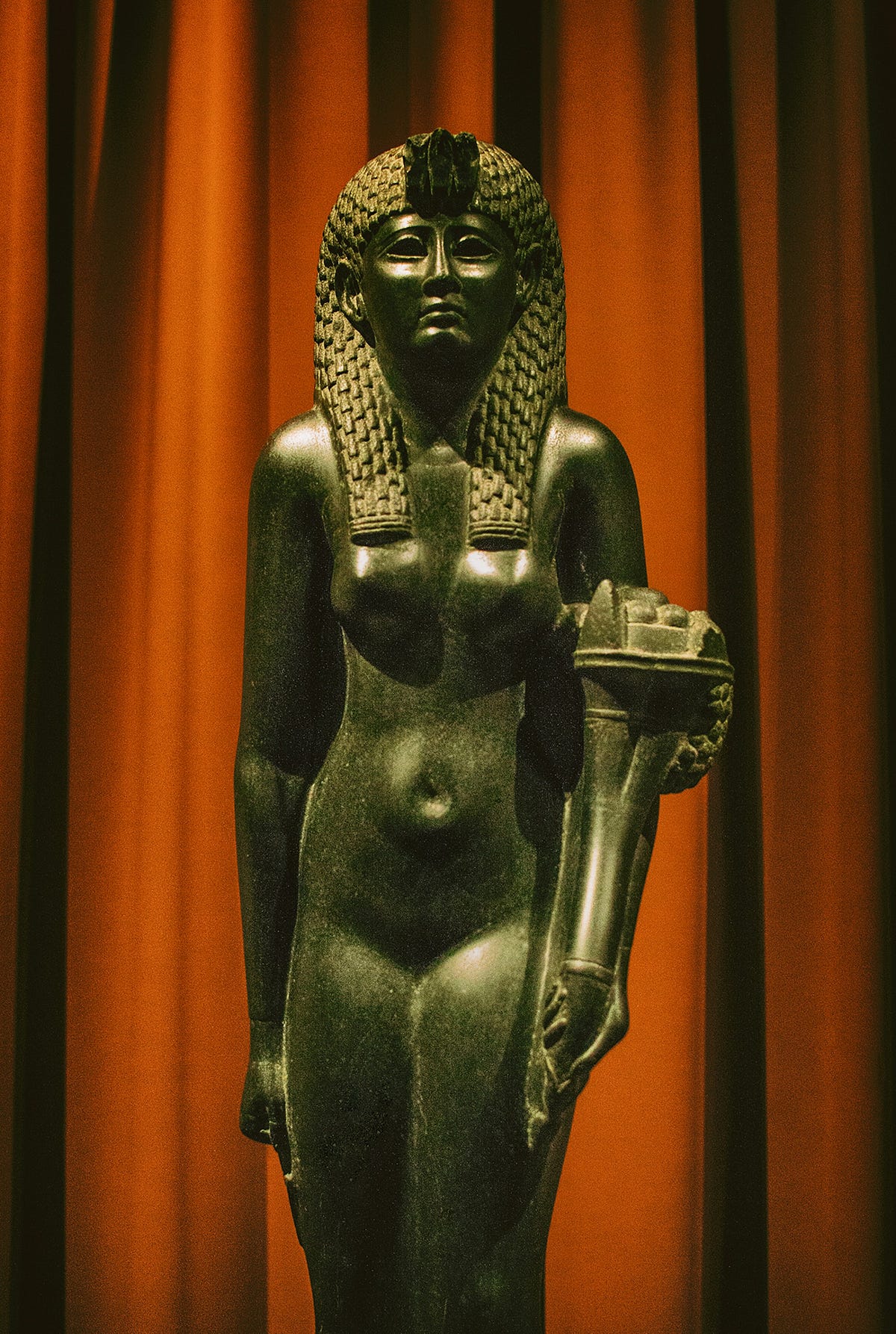
Egyptian kingship was, in theory, inseparable from masculinity. Pharaoh was the living Horus, son of Ra, the solar falcon who ruled the skies. For Sobekneferu, a woman stepping into this role, the challenge was immense. Unlike Hatshepsut, who ruled a century later and sometimes disguised herself in full male regalia, Sobekneferu did not erase her femininity. Surviving statues show her in a fascinating dual form — wearing the kilt of kings while retaining her womanly figure, fusing male and female power.
This was not mere pragmatism; it was cosmic defiance. By embodying both, Sobekneferu declared that kingship transcended gender, that the divine right to rule could flow through a queen as much as a king. She dared to rewrite the theology of kingship itself.
The Crocodile God and the Queen
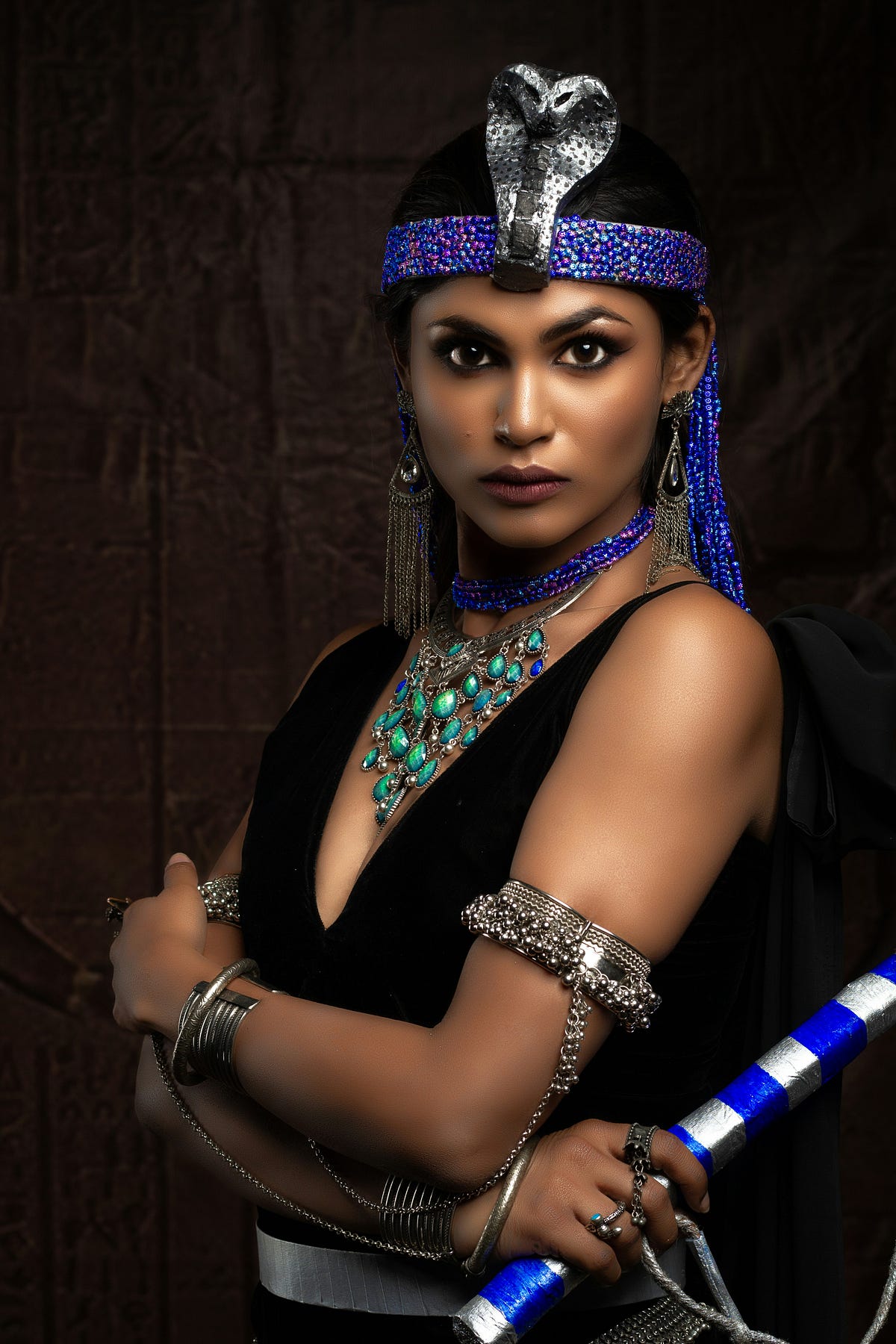
Why Sobek? In Egyptian religion, Sobek was both feared and cherished. A crocodile god of fertility, military might, and protection, he embodied the dual nature of the Nile — giver of life through its floods and taker of life with its deadly beasts. He was also tied to kingship, with his temples serving as centers of political authority.
By aligning herself with Sobek, Sobekneferu tapped into a raw, primal force. She was not simply the gentle nurturer or divine mother figure so often associated with queenship. She was the ferocious guardian, the unpredictable tide, the vengeance of the waters. If earlier queens like Isis symbolized life and rebirth, Sobekneferu brought the terrifying promise of balance — that destruction was as sacred as creation.

The War of the Gods
Her devotion to Sobek also placed her in tension with the dominant priesthood of the time: the cult of Ra and Amun. For centuries, Egypt’s state religion had elevated the solar order — Ra’s predictable journey across the sky, the eternal cycle of sunrise and sunset, stability and cosmic law. But Sobek represented something older, wilder, less easily controlled. He was the god of the dark waters, of the swamp and the abyss, not the shining clarity of the sun.
To embrace Sobek was to challenge the solar orthodoxy. In this light, Sobekneferu’s reign can be seen as more than a political interlude. It was a spiritual rebellion, a brief resurgence of the older Nile cults against the growing dominance of the solar priesthood. Her rule may have been short, but it carried the weight of a cosmic war — order versus chaos, sun versus water, priest versus queen.
The Seven Hathors and the Cosmic Feminine
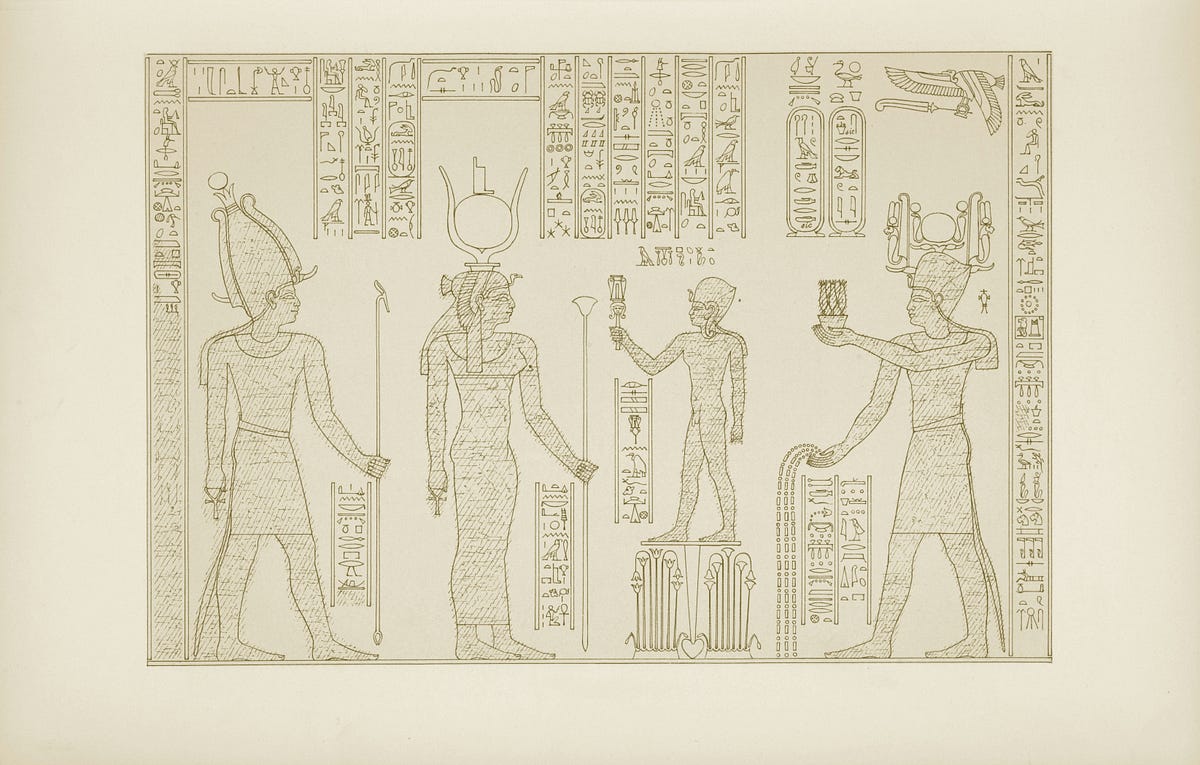
This is what I’ve discovered. Within Egyptian mythology, the Seven Hathors were celestial beings who appeared at birth to declare the fates of mortals. Associated with music, fertility, and destiny, they were also guardians of thresholds — the in-between places where life meets death, where fate meets choice. Sobekneferu’s connection to feminine forces like the Seven Hathors is hinted at in her balancing of dual identities, straddling roles traditionally separated by gender.
Her reign suggests that she sought to awaken a forgotten dimension of feminine divinity — one not confined to motherhood and passivity but active in cosmic struggle. In Sobek, she found the masculine chaos; in Hathor, she found the feminine destiny. By merging both, she embodied a sacred duality, an esoteric code written into her very kingship.

The Womb as a Sacred Weapon
Sobekneferu’s invocation of Sobek was not only political but metaphysical. In Egyptian thought, the womb was a cosmic portal, a place of birth and rebirth, creation and destruction. To hold life within was to wield the mysteries of the cosmos. Sobek, lord of the waters, was linked to the primordial womb — the dark, fertile depths where creation stirred.
By tying herself to Sobek, Sobekneferu reclaimed the womb not as passive receptacle but as active force. Her very body became an extension of divine waters, unpredictable and unstoppable. In a world where priestly authority sought to confine women to symbolic roles, Sobekneferu made her physicality a site of divine power.

Architecture as Theology
Though her reign lasted only about four years, Sobekneferu left her mark on Egypt’s sacred landscape. She completed works at the Labyrinth of Amenemhat III near the Fayum region, a complex so vast that Herodotus centuries later described it as surpassing the pyramids. She also expanded Sobek’s cult center in Crocodilopolis, reinforcing her alignment with the god.
Architecture was never neutral in Egypt. Every stone, every alignment, was a theological statement. By building in Sobek’s honor, Sobekneferu cemented her defiance against the solar cult. She inscribed her reign into the very geography of Egypt, leaving temples and monuments as silent witnesses to her cosmic struggle.
The Erasure of a Queen
And yet, despite her audacity, Sobekneferu’s legacy was short-lived. She died without an heir, and with her death, the 12th Dynasty ended. The following period — the 13th Dynasty — was marked by instability, with rulers rising and falling in rapid succession. Perhaps deliberately, later chroniclers minimized her reign. Where Hatshepsut was vilified and erased, Sobekneferu was simply neglected, her story swallowed by time.
But silence can be as telling as vilification. That she was not celebrated suggests her reign unsettled the orthodoxy too deeply to be integrated into later narratives. She was an anomaly that threatened the coherence of the myth. Better, perhaps, for later priests and kings to let her slip into obscurity than to wrestle with what her reign implied.
Sobekneferu as Archetype
Today, Sobekneferu can be seen as more than a historical footnote. She is an archetype of resistance, a symbol of feminine power that does not yield to patriarchal categories. She reminds us that power can be dual, that chaos and order are both sacred, and that history is often rewritten by those who fear its deeper truths.
Her reign forces us to ask: what is the true nature of power? Is it the predictable cycle of the sun, or the unpredictable flood of the river? Is it the authority of the priest, or the defiance of the queen? In Sobekneferu, we see that power is not one or the other — it is both, inseparable, a cosmic duality embodied in flesh.
Conclusion: The Queen Who Stared Down the Gods
Sobekneferu’s story is one of defiance, courage, and cosmic ambition. She ruled not only a kingdom but a spiritual battlefield, daring to challenge the solar priesthood and redefine kingship itself. She was not content to be remembered as daughter, wife, or mother; she claimed the throne as herself, as Sobek’s chosen, as Pharaoh.
Her reign may have been brief, but her legacy endures in the cracks of stone, in the whispers of myth, and in the resurgence of interest in the forgotten queens of Africa. She was more than a ruler — she was a vengeful goddess, a living paradox, a queen who stared down the gods and carved her own place in the cosmic order.
In Sobekneferu, we glimpse not just the past but the eternal struggle of humanity: the battle between conformity and defiance, between orthodoxy and rebellion, between silence and voice. And in her defiance, we find inspiration — a reminder that even in the face of erasure, the truth of power can never be wholly extinguished.
🎧 Listen to the Full Episode
📺 Watch on YouTube:
About the King Cam’s Ujumbe Podcast
The Podcast, hosted by King Cam (Marques D. Cameron Sr.), explores the hidden histories, spiritual traditions, and mystical wisdom of ancient Africa. Each episode uncovers forgotten knowledge and empowers listeners to connect with their ancestral heritage.
Check out these books and gifts on Amazon!
Thanks for reading! As an Amazon Associate, I get a small commission for each purchase you make after you click on my link and you shop, but it doesn’t cost you anything extra. Please use my links below!
Reveals the achievements of Sobekneferu, the political and religious issues of her age, the temples and ruins…amzn.to
This fascinating saga spans 3,000 years of Egyptian queenship from Early Dynastic times until the suicide of Cleopatra…amzn.to
Interested in exploring the depths of history, education, or religion through engaging articles? I’d love to contribute my expertise as a freelance writer.
Feel free to reach out at kingcamujumbe@gmail.com for collaborations or inquiries. Let’s create something impactful together!


No comments:
Post a Comment