Wednesday, August 27, 2025

Pharaohs in the Shadows: Betrayal, Exile, and the Fight for Legacy


Pharaohs in the Shadows

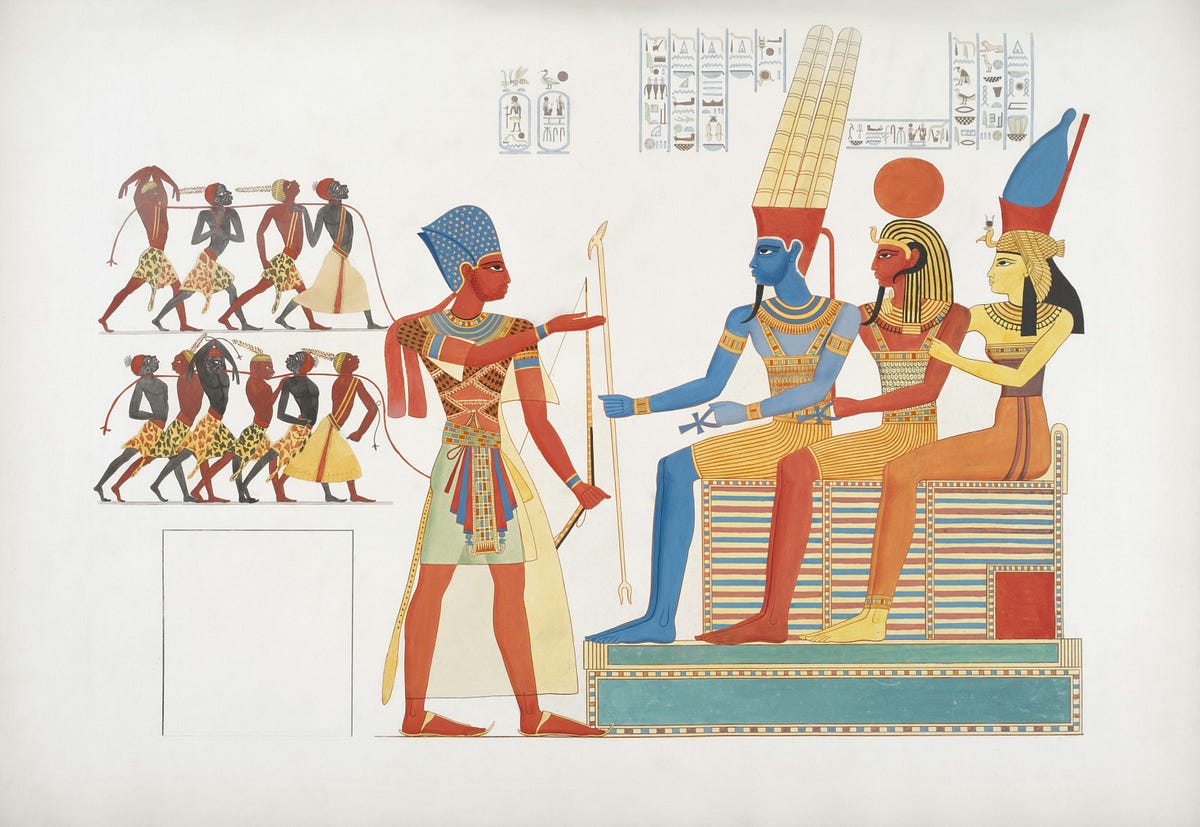
Someone asked me, “What would happen if a Pharaoh steps down?” From the outside, the life of a Pharaoh seems untouchable. That’s what I thought. You have the golden crowns, vast temples, and the aura of divinity itself. The Egyptian ruler was a king as well as the earthly embodiment of Horus, the falcon‑god, and the divine intermediary between humanity and the gods. Yet beneath the glittering surface, their reigns were rarely secure. Betrayal simmered in the courts, foreign invaders lurked at the borders, and sometimes the heaviest burden came from the throne itself. On my podcast, we discussed the pharaohs in the shadows. Where you have abdications, conspiracies, erasures, and the fight for legacy. Let’s talk about it.
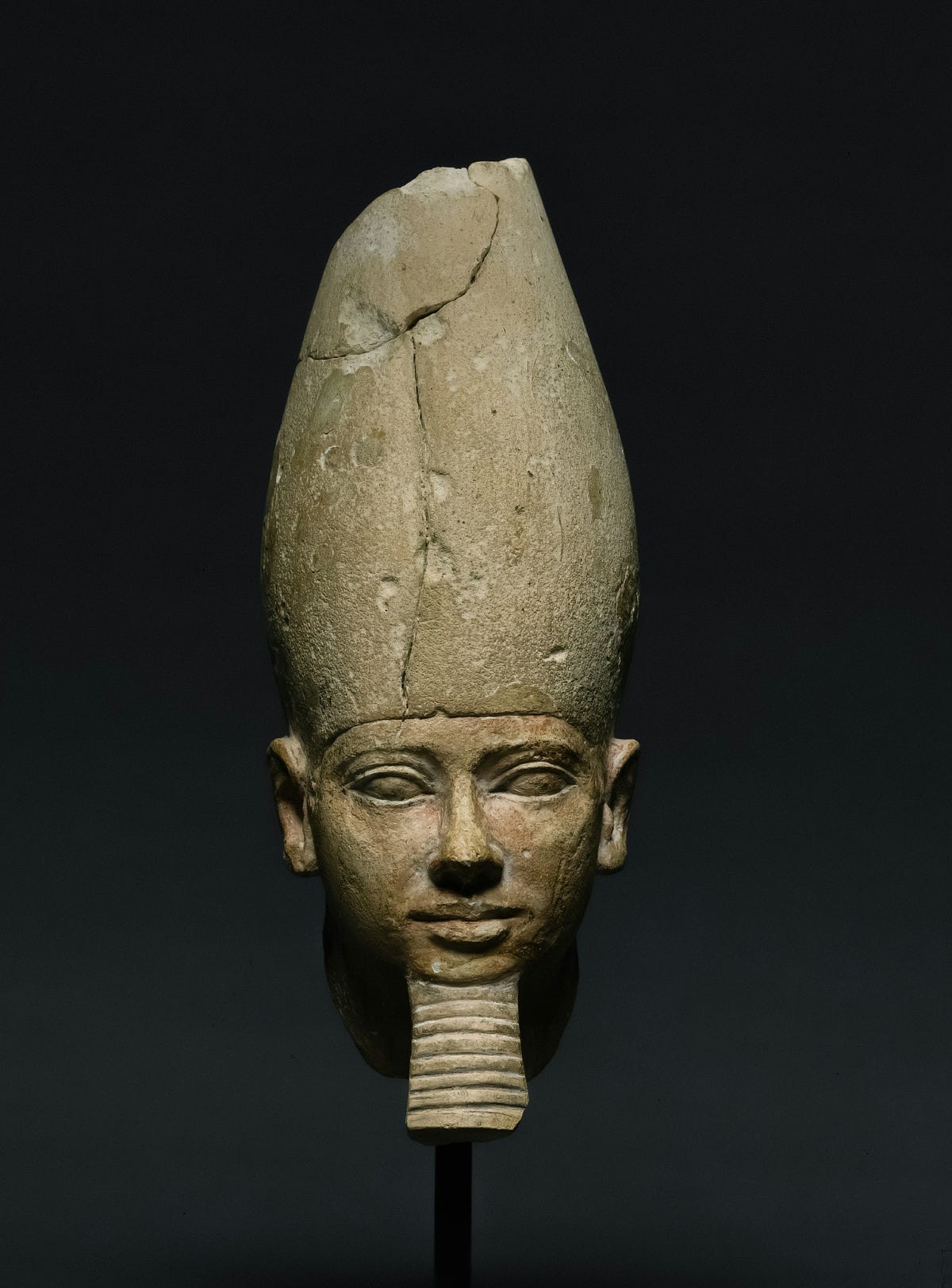

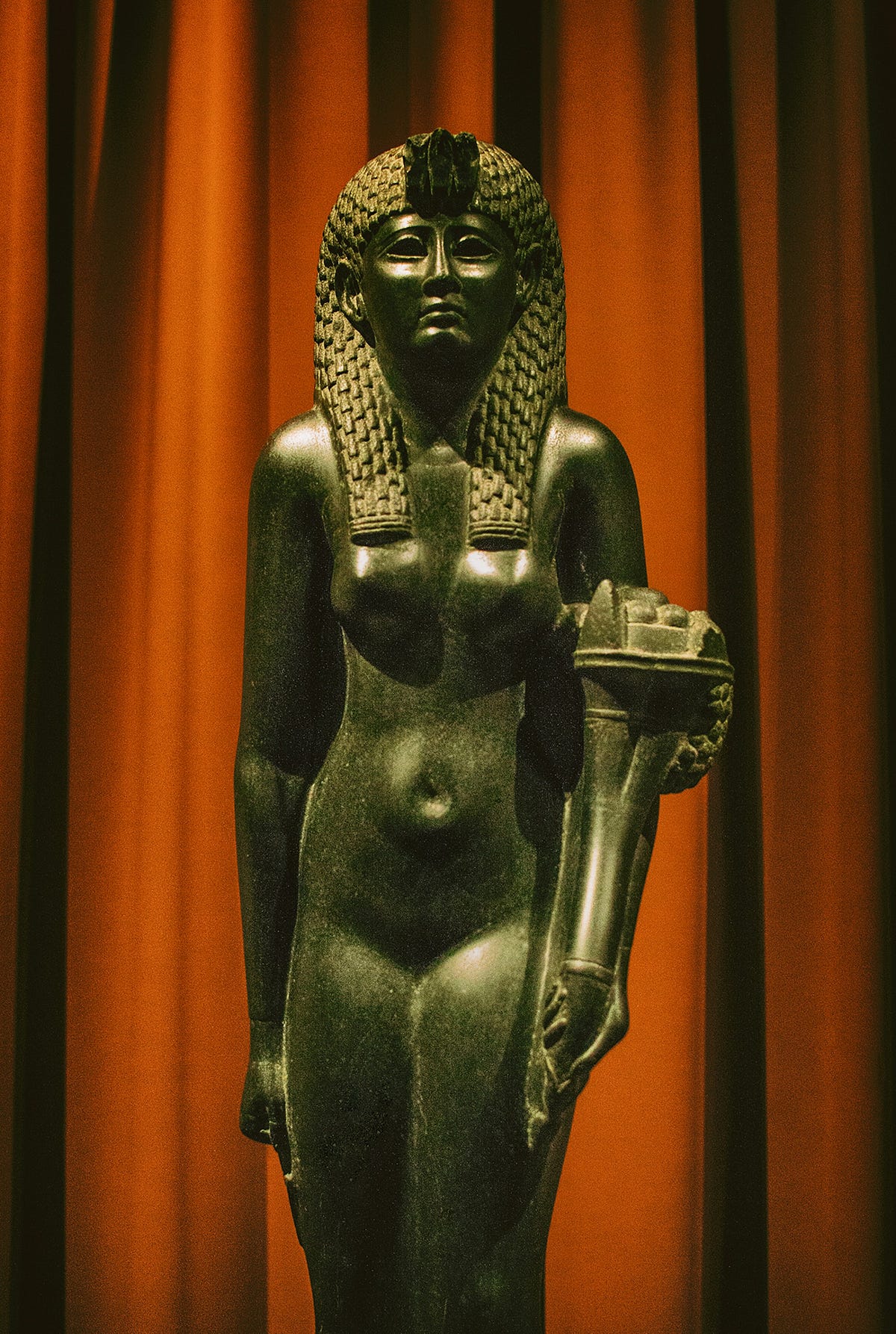
Photo by The Cleveland Museum of Art on Unsplash

The Divine Mask of Kingship

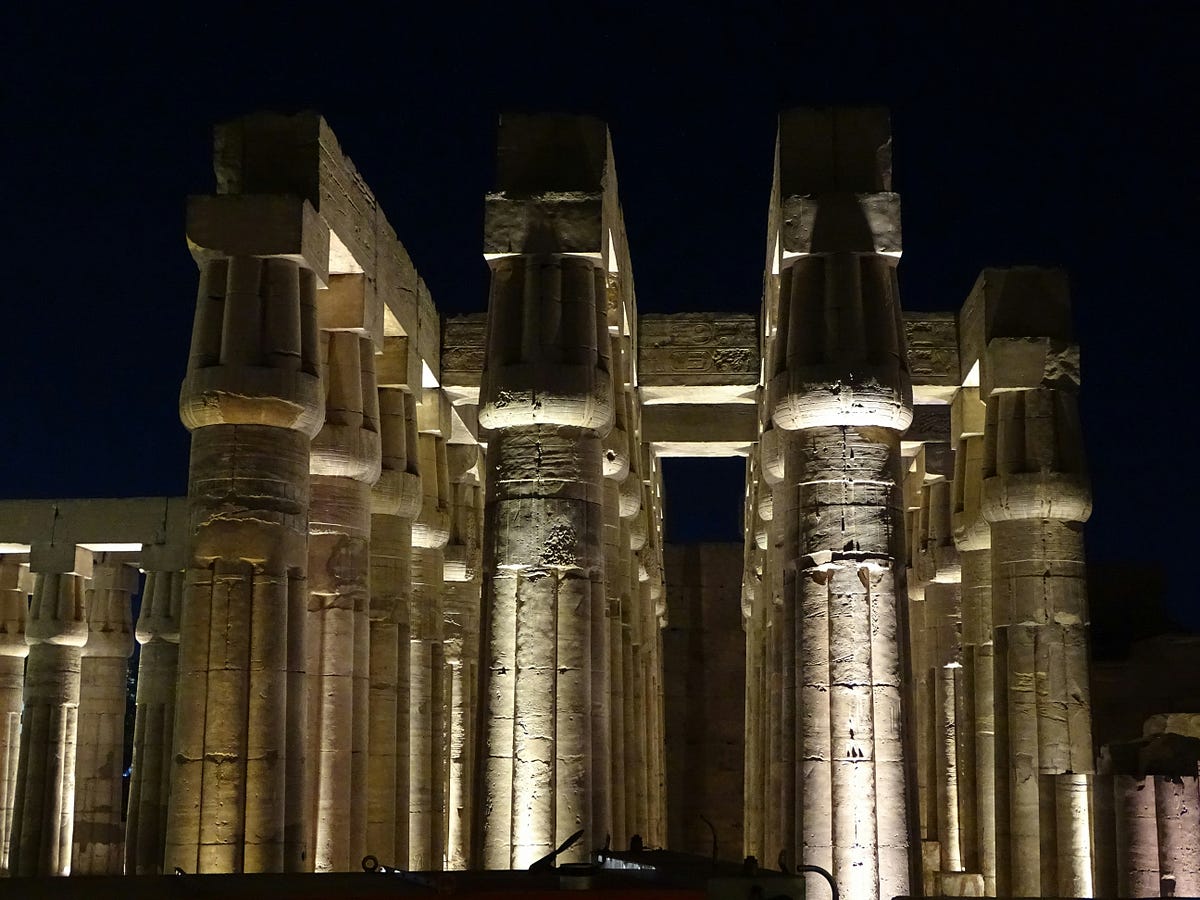
Walk through the colossal halls of Karnak or Luxor today, and you will still see their names etched into stone. Hieroglyphs proclaiming victories, hymns sung to their glory, and reliefs portraying them as gods among mortals. To the Egyptians, the Pharaoh was not simply a political ruler. He was divine — the living Horus, the chosen vessel of ma’at (cosmic order), and the intermediary between people and the netjeru (gods). Their rule was meant to be absolute, sanctioned by heaven itself.

But divine titles did not make pharaohs invulnerable. Court intrigue, foreign invasion, and even their own bodies could topple the mightiest ruler. Sometimes, their fall was so complete that later generations attempted to erase their very names from memory.


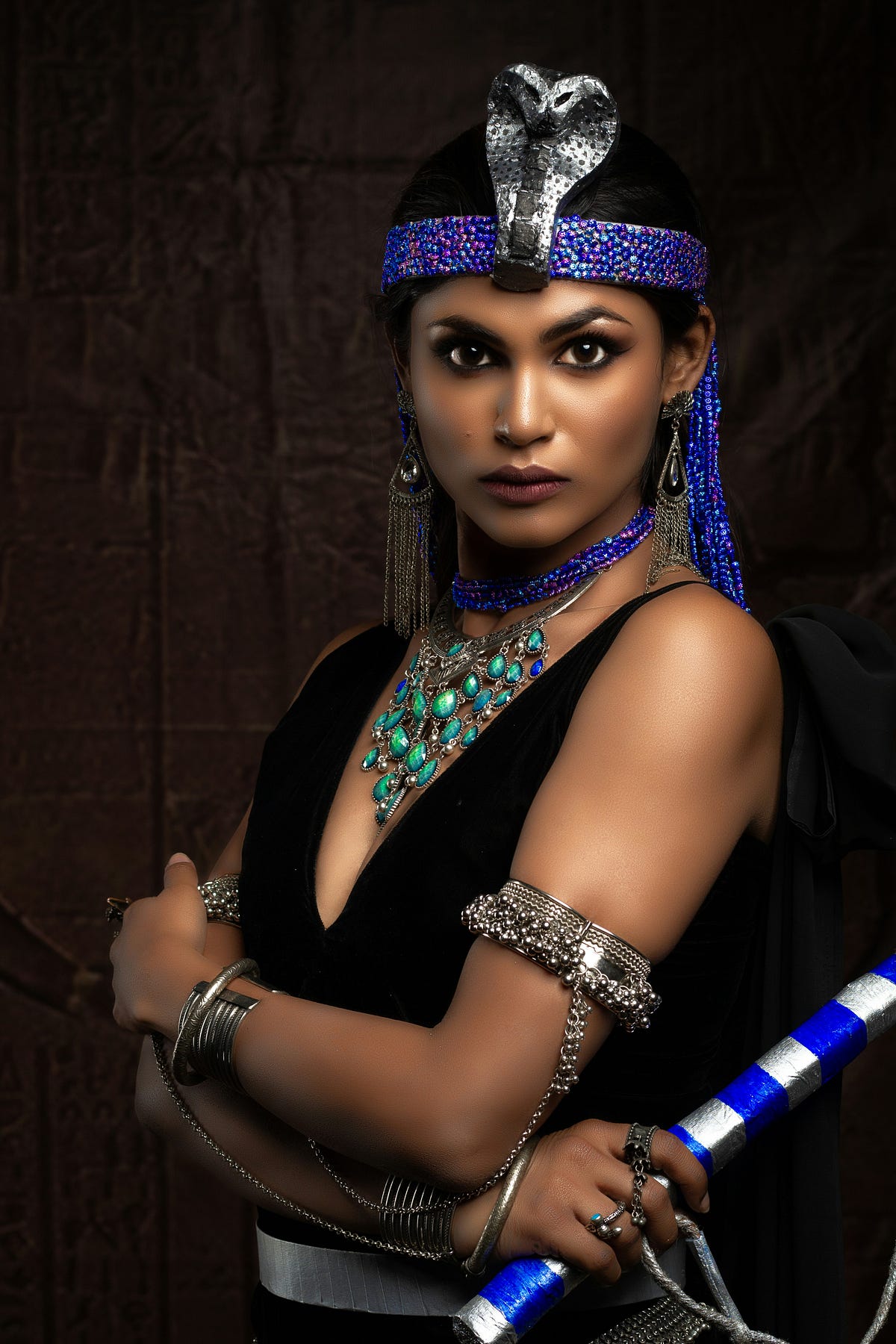
Photo by Dilip Poddar on Unsplash

Kings Who Chose to Step Aside

We often assume ancient rulers clung to power until their deaths. But in Egypt, abdication — though rare — did happen. Sometimes it was voluntary, other times it was forced under the weight of age, illness, or spiritual conviction.

One of the most fascinating aspects of Egyptian kingship was the heb‑sed ritual, a jubilee ceremony held after 30 years of rule and repeated every 3–4 years thereafter. The purpose was not ceremonial alone. The king had to prove his physical vitality — running laps, demonstrating strength, and showing he was still fit to protect the realm. Kingship, in Egypt, was not only about wisdom and ritual knowledge but also about physical endurance. A Pharaoh too weak to perform was unfit to rule.

Some stepped down willingly. Illness, old age, or exhaustion could prompt a ruler to abdicate in favor of a younger successor. Others did so for deeply religious reasons, retreating into spiritual seclusion. To many Egyptians, this was not a failure but a noble pursuit — trading earthly power for eternal wisdom.

Yet abdication was never simple. To relinquish kingship was to give up a divine role. It meant leaving behind the throne where one had been enthroned by priests, blessed by Hathor, and sanctioned by the queen mother. It was a withdrawal not just from politics, but from divinity itself.

Photo by Siyi on Unsplash

Co‑Regency: Training the Next Pharaoh

Egyptian rulers understood that the throne was too fragile to leave tranditions to chance. During prosperous times, especially in the Middle and New Kingdoms, co‑regency was common. A Pharaoh might appoint his son, daughter, or chosen heir as co‑ruler, legitimizing them through religious ceremonies.

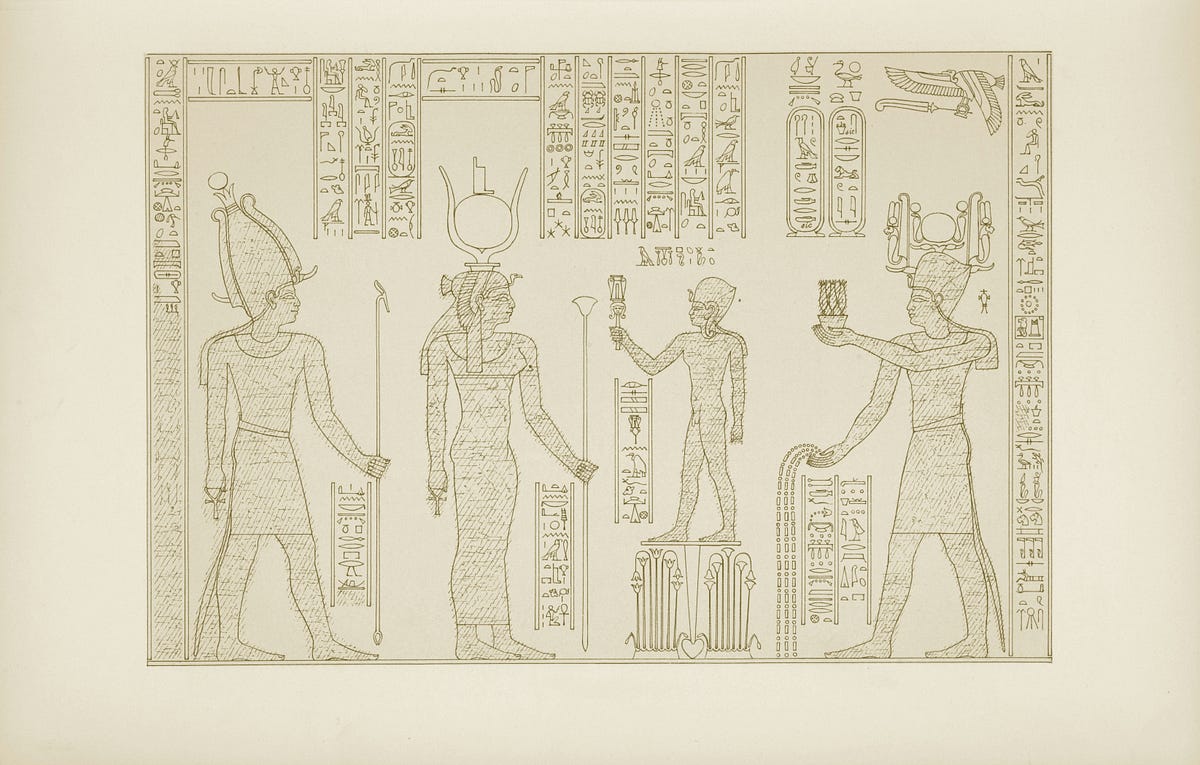
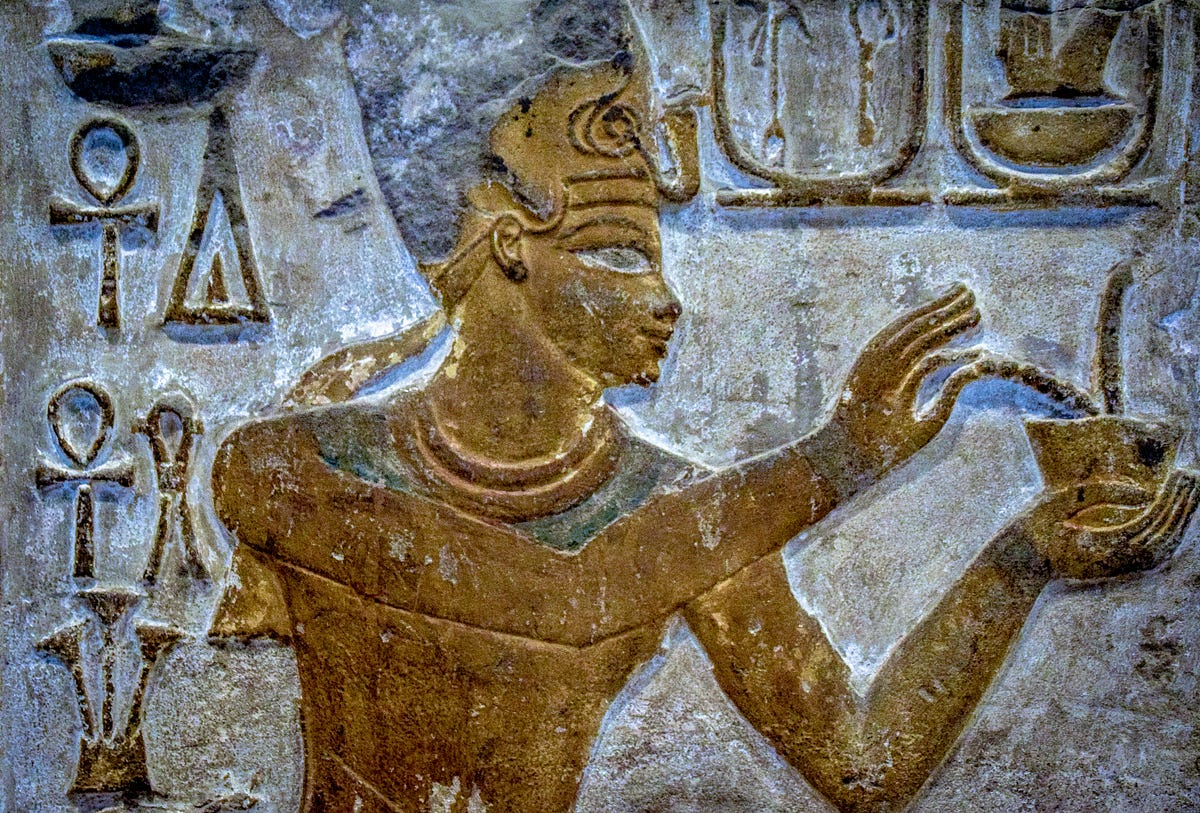
Reliefs show younger rulers receiving the royal insignia directly from the gods — a divine stamp of approval staged for the people. Their names began to appear in cartouches alongside the reigning Pharaoh, signaling shared rule. In this way, Egyptians ensured continuity. The throne was never vacant; the transition was seamless.

This principle — leaders preparing leaders — resonates even today. Ancient Egyptians recognized that legitimacy was not inherited automatically but had to be established, trained, and sanctified.
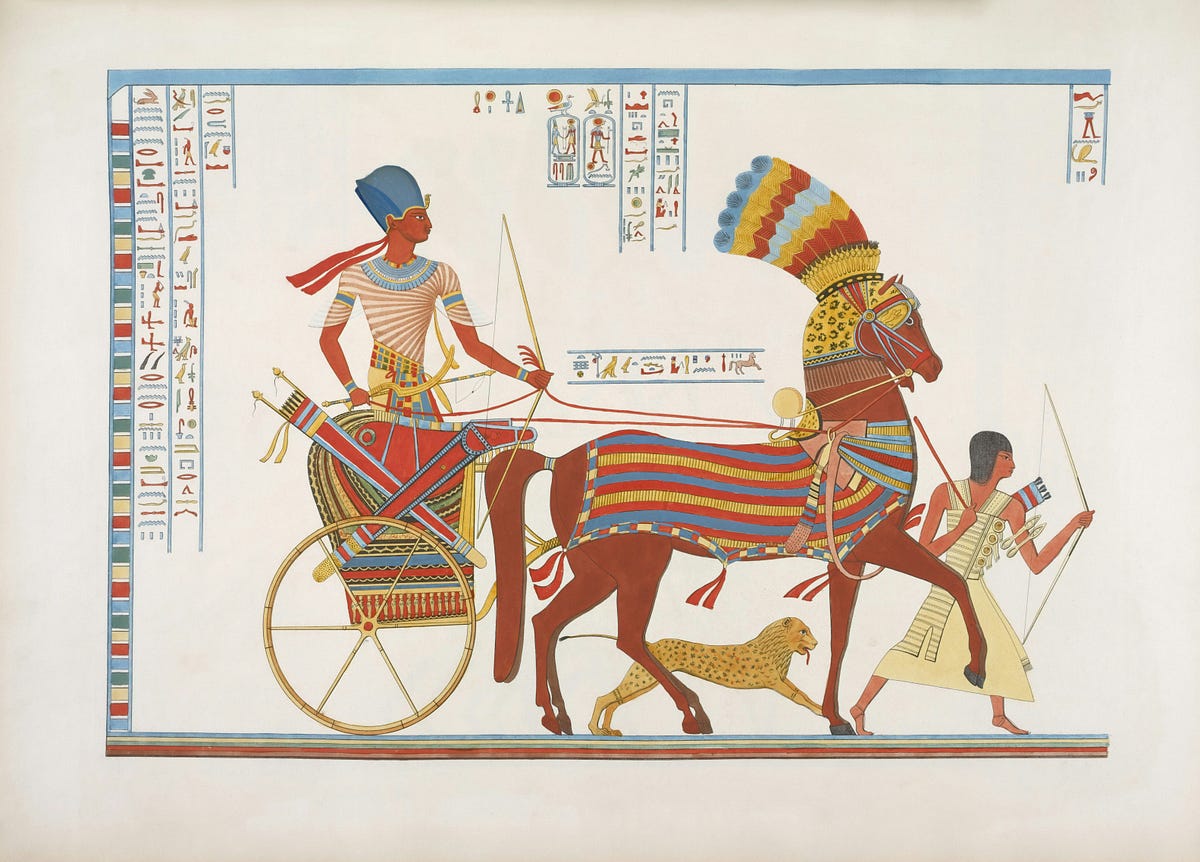

Photo by The New York Public Library on Unsplash

When Power Turns Deadly: Betrayal and Conspiracy

I learned that not all Pharaohs had the luxury of orderly succession. The court was a dangerous place. Priests, generals, and even royal wives could become conspirators.

One of the most infamous cases is the Harem Conspiracy against Ramesses III in the late New Kingdom. His own wife, Queen Tiye, orchestrated a plot involving court officials, military officers, and members of the royal harem. Their aim? To assassinate the Pharaoh and place her son, Pentawere, on the throne. 

The conspiracy failed, but it revealed how fragile divine kingship could be. Ramesses was severely wounded and likely killed in the attempt. Pentawere was forced to take his own life, and the court descended into bloody retribution. Yet despite the Pharaoh’s vengeance, the conspiracy marked the beginning of the decline of the Ramesside dynasty. We may have to talk about this in another episode.

Betrayal was not always so dramatic, but it was ever‑present. Rivalries simmered in the palace. Foreign factions within Egypt sometimes lent support to coups. Even the most powerful Pharaoh was never safe from those closest to him.

Photo by Gabriel Schumacher on Unsplash

Foreign Invasions: The End of Divine Rule?

If betrayal came from within, conquest came from without. By the time Greece and Rome cast their gaze on Egypt, the land of the Pharaohs was already old. Nubians, Assyrians, and Persians had all tested Egypt’s borders — and sometimes breached them.

One of the most telling examples is Taharka, the Nubian Pharaoh of the 25th dynasty. Though he reigned with power and vision, he faced relentless assaults from the Assyrian Empire. Despite victories, Egypt eventually succumbed, and Taharka was driven back to Nubia. Yet his reputation did not fade. In Nubia, he was revered as a hero who had defended Egypt against overwhelming odds. His memory survived in temples and oral tradition, proof that defeat on the battlefield did not erase legacy.

Later, the Persian conquest under Cambyses II (525 BCE) delivered a harsher blow. Pharaoh Psamtik III was defeated, humiliated, and executed. The Persians installed governors (satraps) to rule Egypt, but even they understood the power of Egyptian symbols. They adopted Egyptian customs and rituals to legitimize their rule. It was a clever appropriation — wielding divine imagery without respecting its true significance.


Photo by Mahmoud Refaat on Unsplash

Damnatio Memoriae: Erasure as Punishment

Perhaps the cruelest fate a Pharaoh could suffer was damnatio memoriae — the deliberate erasure of their name and image from history. Temples defaced, statues smashed, inscriptions chiseled away — all to ensure that a ruler was not remembered in eternity.

This happened to Hatshepsut, one of Egypt’s greatest queens. After her death, her successor Thutmose III ordered her images removed and her name erased. Yet her magnificent mortuary temple at Deir el‑Bahari endured, and modern archaeology has restored her legacy as one of Egypt’s most successful and innovative rulers.

Another victim was Akhenaten, the so‑called “heretic king.” His radical devotion to Aten, the sun disk, upended Egypt’s religious and political balance. After his death, his successors tried to obliterate his memory, razing his temples and erasing his name. But ironically, their efforts backfired. When archaeologists rediscovered Amarna in the 19th century, Akhenaten’s story fascinated the world, making him one of the most famous Pharaohs today.

Erasure, meant as annihilation, often ensured immortality. By attempting to bury their stories, successors only highlighted them for future generations.


Photo by M abnodey on Unsplash

Legacy Beyond the Throne

For Egyptians, memory was eternal life. The name, inscribed within the shen ring (a symbol of eternity), was the key to immortality. To be remembered was to live forever; to be erased was the true death.

This obsession with legacy explains why Pharaohs built colossal monuments. Pyramids, temples, obelisks — all were messages to the future, declarations that “I was here. I ruled. Remember me.”

Even when erased, many Pharaohs endured. Hatshepsut’s temple still rises majestically in the cliffs of Deir el‑Bahari. Taharka’s name echoes in Nubian inscriptions. Akhenaten’s vision lives on in the ruins of Amarna. Memory, it seems, cannot be so easily destroyed.

Lessons from the Pharaohs’ Shadows

The rise and fall of Egypt’s rulers reveal universal truths. This is what I learned in studying this. 

Power is fragile, even when cloaked in divinity.
Legacy is contested, fought over by successors, enemies, and history itself.
Preparation matters — co‑regency and ritual renewal show that leadership must be nurtured, not assumed.
Memory is resilience — attempts to erase often immortalize.

Pharaohs lived as gods but died as humans. Some fell to betrayal, others to invasion, others to the chisel of erasure. Yet many endure today, their names resurrected by stone, archaeology, and story.

Conclusion: Shadows that Shine

To study the Pharaohs in the shadows is to see beyond the golden mask of Tutankhamun, beyond the stone colossi of Ramses, beyond the myths of eternal power. It is to recognize the fragility of leadership and the endurance of memory. Betrayal, exile, and damnatio memoriae could not silence them. The Pharaohs fought not just for thrones, but for legacy, and in that battle, many triumphed long after death.

Their stories remind us that true immortality lies not in crowns or armies but in being remembered. For as long as we speak their names, the Pharaohs still rule — from the shadows.

🎧 Listen to the Full Episode

📺 Watch on YouTube  


About the King Cam’s Ujumbe Podcast

The Podcast, hosted by King Cam (Marques D. Cameron Sr.), explores the hidden histories, spiritual traditions, and mystical wisdom of ancient Africa. Each episode uncovers forgotten knowledge and empowers listeners to connect with their ancestral heritage.


Check out these books and gifts on Amazon!

Thanks for reading! As an Amazon Associate, I get a small commission for each purchase you make after you click on my link and you shop, but it doesn’t cost you anything extra. Please use my links below!

Thutmose III: The Military Biography of Egypt's Greatest Warrior King  

In the course of his thirty-two-year reign over ancient Egypt, Thutmose III fought an impressive seventeen campaigns…amzn.to  

Temple Ritual at Abydos  

The Temple of Seti I at Abydos is is one of the great monuments of the New Kingdom. Rosalie David's book, last printed…amzn.to  

Interested in exploring the depths of history, education, or religion through engaging articles? I’d love to contribute my expertise as a freelance writer.  

Feel free to reach out at kingcamujumbe@gmail.com for collaborations or inquiries. Let’s create something impactful together!


Monday, August 25, 2025

Our Keeper: Finding Peace in God's Protection


Our Keeper

I am not a theologian. However, there are moments in life when we find ourselves in valleys — not the scenic kind with flowing streams and wildflowers, but the valleys of struggle, uncertainty, and pain. These are the places where we feel vulnerable, exposed, and desperately in need of help. It’s in these moments that the words of Psalm 121 become more than just scripture. They become a lifeline for me. Maybe it will encourage you.


Photo by Tachina Lee on Unsplash

Looking Up When We’re Down

“I will lift up mine eyes unto the hills, from whence cometh my help. My help cometh from the Lord, which made heaven and earth.” Psalm 121:1–2

King David, the author of this psalm, knew something about valleys. He was a ruler, a warrior, and a great leader. However, he was also human. He faced struggles that would break lesser men: running from King Saul, battling the Philistines, and even fleeing from his own children during times of civil war. Some scholars believe this Psalm was written during his conflict with his eldest son Absalom, a time when David found himself literally and figuratively in a valley.

This Psalm may have been written in time of war. But it can also be for those who are traveling. The people that are going from point A to point B. And they find themselves in between. 

Have you ever found yourself in between?

Those long road trips where there’s no city lights in sight…the people who were going between cities…for the rail riders or those who for some reason walk the trails with the hills in them…

Let’s be honest, every situation in life is not a mountain top experience. Every situation is not 

Cimatic
On top of the world
On cloud nine
Ecstatic
Elated
Overjoyed, or ever joyful.

Sometimes you find yourself in the valley.


Photo by Eric Ward on Unsplash

When David declared “I lift mine eyes towards the hills,” he was describing more than just a physical action, it was a spiritual action. That lifting up reminds me of prayer. 

It’s lifting up in 

Supplication
In faith
In hope
In boldness
Optimism
Confidence and assurance.
Photo by Nghia Le on Unsplash

Now here’s what’s important to understand: in David’s time, during war or when traveling on the road, the hills weren’t just any hills. He wasn’t looking at some random hillside, and he wasn’t looking to see if there were any other problems out there like we would do — you know how we look around saying 

“If it’s not one thing, it’s another!” 

He wasn’t scanning to see if enemies were hiding or lurking in the hillside.

David was looking at Mount Moriah, looking at Mount Zion — the place where the Ark of the Lord resided, the place where God’s presence dwelled. Because where the Spirit of the Lord is, there is liberty.

When David said his help came from the Lord, he was making a powerful declaration. His help didn’t come from money, not from status, not from influence or political connections. Is there anybody reading this who can testify? You may have all the resources in the world, but your real help… You may go through sometimes, but your help comes from the Lord.

Jonathan Nelson captures this beautifully in his song: “I’ve got evidence, I’ve got confidence, I’m a conquer, I know that I’ll win, I know who I am, God wrote it in his plan, For me, my name is VICTORY!”

When David said “lift up mine eyes,” he was essentially saying lift up your head — be ye lifted up, you everlasting doors! This is about positioning ourselves to receive help from the only true source.


Photo by Tim Rüßmann on Unsplash

The Reality of Our Valleys

Let’s be honest, not every moment in our Christian journey is a mountaintop experience. We don’t always feel on top of the world, cloud nine, or overwhelmingly joyful. Sometimes we find ourselves in valleys that feel all too familiar:

The valley of sadness or grief
The valley of sickness and physical struggle
The valley of resentment and bitterness
The valley of hopelessness and feeling helpless
The valley of returning to mundane responsibilities after a loss

These valleys aren’t random; they’re part of the human experience. David, being a soldier, understood that valleys are where the real battles happen. That’s where the strongholds are, where enemies gather, where obstacles seem insurmountable. In reading this this is what I’ve learned about it. There is a three fold protection.

Photo by Nik Shuliahin 💛💙 on Unsplash

Our Three-Fold Protection

1. The Lord Is Our Keeper

“The Lord is thy keeper: the Lord is thy shade upon thy right hand.” — Psalm 121:5

The Hebrew word for “keeper” here is shamar, which means so much more than just keeping something safe. It means to guard, protect, observe, watch, and wait for. When God keeps us, He shamars us. In other words, he actively guards our every step.

Here’s the problem. We often want to be kept by other things: other people, family members, financial security, or social status. While these can provide temporary comfort, they cannot sustain us the way God can. Even our most spiritual family members, as anointed and wonderful as they may be, cannot truly keep us in the way our souls need to be kept.

God provides shade in the heat of our struggles. When we try to go outside His boundaries, outside His will and His way, we expose ourselves to the scorching heat of life’s trials. But in His keeping place, there’s shade — there’s peace, rest, and the cooling breeze of the Holy Spirit.


Photo by Dominik Chelstowski on Unsplash

2. The Lord Is Our Preserver

“The Lord shall preserve thee from all evil: he shall preserve thy soul.” — Psalm 121:7

A few weeks ago while in Beaumont, my wife and I went to Pappadeaux to celebrate my birthday. And Pappadeaux can be expensive! Knowing this, we weren’t so quick to throw it all away. We took some to-go bags. We wanted to preserve it, or should I say, save it for later. When you pay for good food and you may not get to eat all of it. You put it away where I’m from it’s called “leftovers”. You want to enjoy it later, so you preserve it. You get it, put it in a bowl, close it, seal it, store it in the refrigerator. When you come back the next day, the taste is better, and the seasoning is better. Because it’s preserved and you paid for it.

Photo by Jeffery Erhunse on Unsplash

My Aunt Marion, my mom’s older sister, would put fruit in jars. I wondered why she did that

“Why did she put those good peaches in a jar and put them on a shelf in the garage?

I was told she did it to preserve them, to keep them from spoiling, to keep them from going bad.

This is what God does when you are in Him, when you are being kept by Him, secured by Him, preserved by Him. God preserves us from the contamination of evil, from toxic influences, from the elements that would spoil our souls.

This preservation includes:

Salvation and deliverance
Protection from the enemy’s attacks
A hedge of protection around our lives
Security in our eternal relationship with Him

As Jesus promised:

 “All that the Father giveth me shall come to me; and him that cometh to me I will in no wise cast out” (John 6:37)

We are sealed, preserved, and protected by His love.

Photo by Sheldon Kennedy on Unsplash

3. The Lord Is Our Safeguard

“The Lord shall preserve thy going out and thy coming in from this time forth, and even for evermore.” — Psalm 121:8

I love my Aunt Marion — she’s awesome. I told you she had those peaches in a jar in the garage, and that garage door was locked. The only person who could get to them was her. She safeguarded them.

The Lord is our safeguard. So much so that the enemy has to ask permission to get to you. That’s your hedge of protection, that cleft in the rock where He hides you.


Photo by Nicole Wilcox on Unsplash

Personal Thoughts

Perhaps you’re reading this from your own valley right now. Maybe you’re dealing with:

Problems that seem overwhelming
Situations that feel impossible
People who have lied about you or mistreated you
Moments when you want to give up or give in
Struggles, sickness, setbacks, or troubles on every side

Here’s what I want you to know: He preserves you through it all. When you want to act foolishly, He preserves you. When others get on your nerves, He preserves you. In confusion, upset, and the desire to quit — He preserves you.

The Promise That Covers It All

The beauty of Psalm 121 is found in its comprehensive promise. God’s protection isn’t limited to certain areas of our lives or certain times of day. The psalm specifically mentions:

Protection from the sun by day and the moon by night
Preservation from all evil
Safeguarding of our souls
Protection of our going out and coming in
A promise that extends “from this time forth, and even for evermore”

This is total coverage. This is complete care. This is the kind of keeping, preserving, and safeguarding that only the Creator of heaven and earth can provide.

Lifting Our Eyes Today

When you find yourself in a valley, remember David’s example. Lift your eyes — not to search for more problems, but to look toward the source of your help. Lift them in:

Supplication and prayer
Faith and hope
Boldness and optimism
Confidence and assurance

Your help comes from the Lord, who made heaven and earth. He is:

Jehovah Jireh (your provider)
Jehovah Shalom (your peace)
El Elyon (the Most High)
The Alpha and Omega
Your keeper, preserver, and safeguard
Photo by Brett Jordan on Unsplash

A Closing Encouragement

No matter what valley you’re walking through today, you can lift your head with confidence. You are kept by the One who neither slumbers nor sleeps. You are preserved by the One who paid the ultimate price for your soul. You are safeguarded by the One whose love extends from this time forth and even forevermore. 

Why? Because the Lord is your keeper, and His faithfulness endures forever. His mighty acts of preservation continue in your life every single day. 

Talk to you later.

Check out these books and gifts on Amazon!

Thanks for reading! As an Amazon Associate, I get a small commission for each purchase you make after you click on my link and you shop, but it doesn’t cost you anything extra. Please use my links below!


Interested in exploring the depths of history, education, or religion through engaging articles? I’d love to contribute my expertise as a freelance writer.
Feel free to reach out at kingcamujumbe@gmail.com for collaborations or inquiries. Let’s create something impactful together!


Monday, August 18, 2025

Sobekneferu: The Forgotten Queen Who Challenged Gods and Men


Sobekneferu: The Forgotten Queen Who Challenged Gods and Men

History often remembers kings as the architects of empires and religion as the foundation of divine authority. Yet, there are moments when these two forces collide, when a ruler dares to not only lead but to redefine the spiritual order itself. This is when we decided to take a different approach. One such figure was Sobekneferu is highlighted on my podcast. She was Egypt’s first confirmed female pharaoh, who reigned at the twilight of the 12th Dynasty around 1806–1802 BCE. Overshadowed by the colossal names of Hatshepsut, Nefertiti, and Cleopatra, Sobekneferu remains a mystery — her reign shrouded in fragments of stone, broken statues, and whispered myths. But when we peel back the layers of silence, a portrait emerges of a woman who fused power, religion, and cosmic rebellion in ways few rulers ever dared.


Photo by Kévin et Laurianne Langlais on Unsplash

The Weight of a Legacy

Sobekneferu was the daughter of Pharaoh Amenemhat III, one of the greatest kings of the Middle Kingdom, remembered for his ambitious building projects and hydraulic engineering that tamed the Nile. Yet, when his son and successor Amenemhat IV died without a strong heir, Egypt was left vulnerable. The throne teetered on the edge of chaos, and Sobekneferu, a royal daughter, seized it.

Her very name was revolutionary. “Sobek” linked her to the crocodile god, lord of the Nile’s chaotic waters, a deity both feared and revered. “Neferu” — beauty and perfection — suggested grace and divine favor. In her, the feminine and the feral were intertwined. By invoking Sobek, she positioned herself as both protector and destroyer, embracing the raw force of creation and annihilation.

Photo by Julia Kadel on Unsplash

Pharaoh as Woman, Pharaoh as God

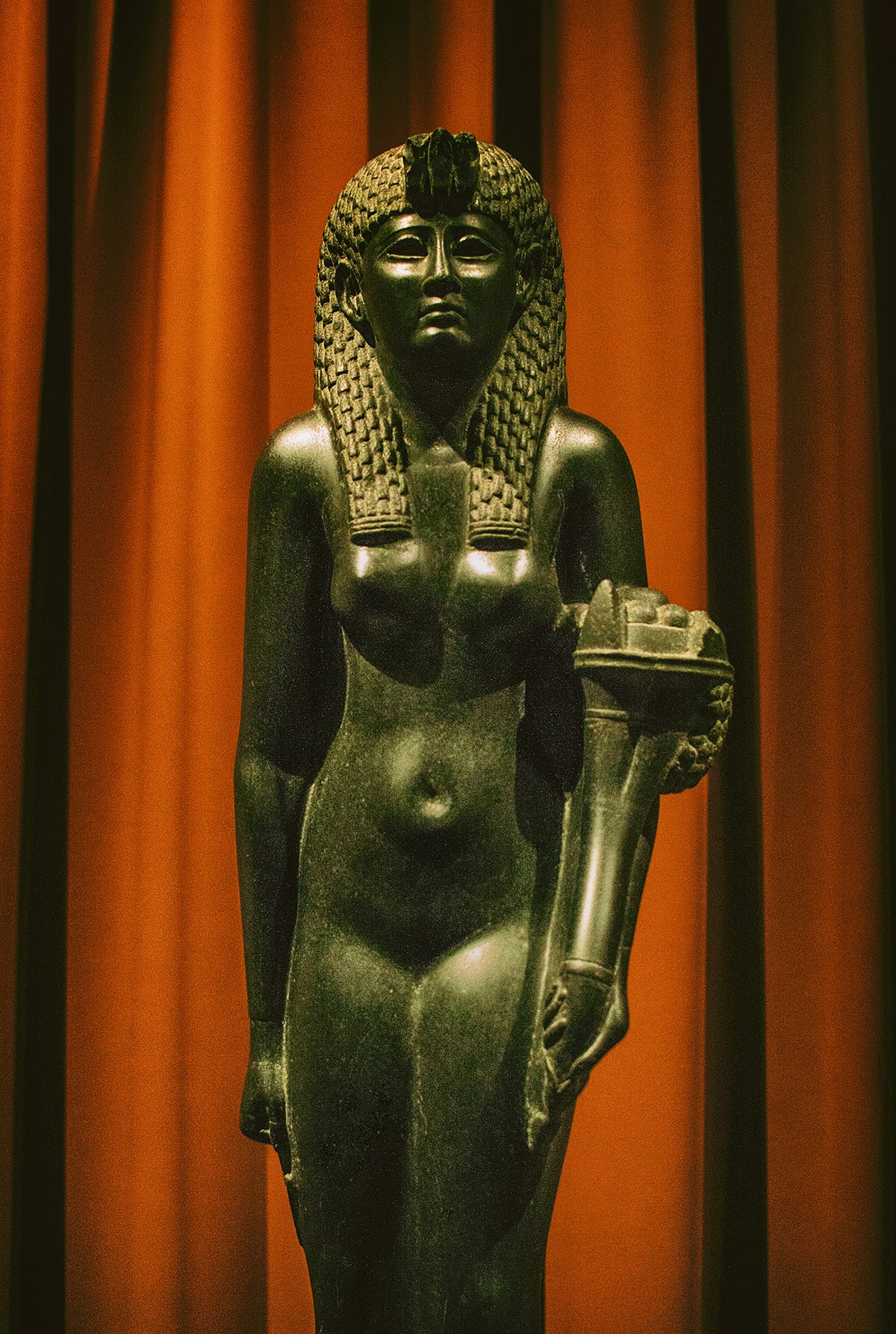
Egyptian kingship was, in theory, inseparable from masculinity. Pharaoh was the living Horus, son of Ra, the solar falcon who ruled the skies. For Sobekneferu, a woman stepping into this role, the challenge was immense. Unlike Hatshepsut, who ruled a century later and sometimes disguised herself in full male regalia, Sobekneferu did not erase her femininity. Surviving statues show her in a fascinating dual form — wearing the kilt of kings while retaining her womanly figure, fusing male and female power.

This was not mere pragmatism; it was cosmic defiance. By embodying both, Sobekneferu declared that kingship transcended gender, that the divine right to rule could flow through a queen as much as a king. She dared to rewrite the theology of kingship itself.

Photo by Nantu DAS on Unsplash

The Crocodile God and the Queen

Why Sobek? In Egyptian religion, Sobek was both feared and cherished. A crocodile god of fertility, military might, and protection, he embodied the dual nature of the Nile — giver of life through its floods and taker of life with its deadly beasts. He was also tied to kingship, with his temples serving as centers of political authority.

By aligning herself with Sobek, Sobekneferu tapped into a raw, primal force. She was not simply the gentle nurturer or divine mother figure so often associated with queenship. She was the ferocious guardian, the unpredictable tide, the vengeance of the waters. If earlier queens like Isis symbolized life and rebirth, Sobekneferu brought the terrifying promise of balance — that destruction was as sacred as creation.

Photo by The New York Public Library on Unsplash

The War of the Gods

Her devotion to Sobek also placed her in tension with the dominant priesthood of the time: the cult of Ra and Amun. For centuries, Egypt’s state religion had elevated the solar order — Ra’s predictable journey across the sky, the eternal cycle of sunrise and sunset, stability and cosmic law. But Sobek represented something older, wilder, less easily controlled. He was the god of the dark waters, of the swamp and the abyss, not the shining clarity of the sun.

To embrace Sobek was to challenge the solar orthodoxy. In this light, Sobekneferu’s reign can be seen as more than a political interlude. It was a spiritual rebellion, a brief resurgence of the older Nile cults against the growing dominance of the solar priesthood. Her rule may have been short, but it carried the weight of a cosmic war — order versus chaos, sun versus water, priest versus queen.

Photo by The New York Public Library on Unsplash

The Seven Hathors and the Cosmic Feminine

This is what I’ve discovered. Within Egyptian mythology, the Seven Hathors were celestial beings who appeared at birth to declare the fates of mortals. Associated with music, fertility, and destiny, they were also guardians of thresholds — the in-between places where life meets death, where fate meets choice. Sobekneferu’s connection to feminine forces like the Seven Hathors is hinted at in her balancing of dual identities, straddling roles traditionally separated by gender.

Her reign suggests that she sought to awaken a forgotten dimension of feminine divinity — one not confined to motherhood and passivity but active in cosmic struggle. In Sobek, she found the masculine chaos; in Hathor, she found the feminine destiny. By merging both, she embodied a sacred duality, an esoteric code written into her very kingship.

Photo by Spencer Saint-Eloi on Unsplash

The Womb as a Sacred Weapon

Sobekneferu’s invocation of Sobek was not only political but metaphysical. In Egyptian thought, the womb was a cosmic portal, a place of birth and rebirth, creation and destruction. To hold life within was to wield the mysteries of the cosmos. Sobek, lord of the waters, was linked to the primordial womb — the dark, fertile depths where creation stirred.

By tying herself to Sobek, Sobekneferu reclaimed the womb not as passive receptacle but as active force. Her very body became an extension of divine waters, unpredictable and unstoppable. In a world where priestly authority sought to confine women to symbolic roles, Sobekneferu made her physicality a site of divine power.

Photo by Lynn Van den Broeck on Unsplash

Architecture as Theology

Though her reign lasted only about four years, Sobekneferu left her mark on Egypt’s sacred landscape. She completed works at the Labyrinth of Amenemhat III near the Fayum region, a complex so vast that Herodotus centuries later described it as surpassing the pyramids. She also expanded Sobek’s cult center in Crocodilopolis, reinforcing her alignment with the god.

Architecture was never neutral in Egypt. Every stone, every alignment, was a theological statement. By building in Sobek’s honor, Sobekneferu cemented her defiance against the solar cult. She inscribed her reign into the very geography of Egypt, leaving temples and monuments as silent witnesses to her cosmic struggle.

Photo by Michael Starkie on Unsplash

The Erasure of a Queen

And yet, despite her audacity, Sobekneferu’s legacy was short-lived. She died without an heir, and with her death, the 12th Dynasty ended. The following period — the 13th Dynasty — was marked by instability, with rulers rising and falling in rapid succession. Perhaps deliberately, later chroniclers minimized her reign. Where Hatshepsut was vilified and erased, Sobekneferu was simply neglected, her story swallowed by time.

But silence can be as telling as vilification. That she was not celebrated suggests her reign unsettled the orthodoxy too deeply to be integrated into later narratives. She was an anomaly that threatened the coherence of the myth. Better, perhaps, for later priests and kings to let her slip into obscurity than to wrestle with what her reign implied.

Sobekneferu as Archetype

Today, Sobekneferu can be seen as more than a historical footnote. She is an archetype of resistance, a symbol of feminine power that does not yield to patriarchal categories. She reminds us that power can be dual, that chaos and order are both sacred, and that history is often rewritten by those who fear its deeper truths.

Her reign forces us to ask: what is the true nature of power? Is it the predictable cycle of the sun, or the unpredictable flood of the river? Is it the authority of the priest, or the defiance of the queen? In Sobekneferu, we see that power is not one or the other — it is both, inseparable, a cosmic duality embodied in flesh.

Conclusion: The Queen Who Stared Down the Gods

Sobekneferu’s story is one of defiance, courage, and cosmic ambition. She ruled not only a kingdom but a spiritual battlefield, daring to challenge the solar priesthood and redefine kingship itself. She was not content to be remembered as daughter, wife, or mother; she claimed the throne as herself, as Sobek’s chosen, as Pharaoh.

Her reign may have been brief, but her legacy endures in the cracks of stone, in the whispers of myth, and in the resurgence of interest in the forgotten queens of Africa. She was more than a ruler — she was a vengeful goddess, a living paradox, a queen who stared down the gods and carved her own place in the cosmic order.

In Sobekneferu, we glimpse not just the past but the eternal struggle of humanity: the battle between conformity and defiance, between orthodoxy and rebellion, between silence and voice. And in her defiance, we find inspiration — a reminder that even in the face of erasure, the truth of power can never be wholly extinguished.

🎧 Listen to the Full Episode

📺 Watch on YouTube:  


About the King Cam’s Ujumbe Podcast

The Podcast, hosted by King Cam (Marques D. Cameron Sr.), explores the hidden histories, spiritual traditions, and mystical wisdom of ancient Africa. Each episode uncovers forgotten knowledge and empowers listeners to connect with their ancestral heritage.


Check out these books and gifts on Amazon!

Thanks for reading! As an Amazon Associate, I get a small commission for each purchase you make after you click on my link and you shop, but it doesn’t cost you anything extra. Please use my links below!


Interested in exploring the depths of history, education, or religion through engaging articles? I’d love to contribute my expertise as a freelance writer.
Feel free to reach out at kingcamujumbe@gmail.com for collaborations or inquiries. Let’s create something impactful together!

Monday, August 11, 2025

Sacred Rites & The Divine Initiation of Queens in Ancient Egypt


Sacred Rites & The Divine Initiation of Queens in Ancient Egypt

“In Kemet, to be queen was not merely a birthright — it was a spiritual transformation, a covenant with the divine.”

Throughout ancient Egypt’s long and mythic history, the role of the queen was never just ceremonial. It was mystical. It was cosmic. In this powerful episode of the King Cam’s Ujumbe Podcast, we went on a spiritual and historical journey to uncover the sacred rites and initiation ceremonies that elevated women into divine queenship.

Far beyond the gold and glamour, these women passed through gates of fire, purification, and divine remembrance — emerging not only as rulers but as walking embodiments of gods.


Photo by nathaniel abadji on Unsplash

A Hidden Path to Power: The Initiation of Queens

In ancient Kemet, queens were not simply declared — they were made. Through initiation, these royal women were anointed in temple rites, taught secret wisdom, and spiritually linked to the divine order known as Ma’at.

These sacred rites often included:

1. Purification Rituals

The queen would be cleansed physically and spiritually — through shaving, bathing, and incense fumigation — mirroring the cosmic rebirth process.

2. Anointing with Oils and Sacred Words

Symbolic of divine union, these acts were performed by high priestesses or the Pharaoh himself.

3. Invocation of Deities

Particularly goddesses like Hathor, Isis, or Mut, who represented cosmic motherhood, divine femininity, and spiritual authority.

This process wasn’t just about status. It was a transformation of the soul — aligning the queen with the Neteru (divine principles), marking her as a sacred vessel of order, power, and fertility.


Photo by Hamid Tajik on Unsplash

Sobekneferu: The Sacred Heretic

One of the most powerful examples of this sacred elevation is Sobekneferu — the first woman to officially rule as Pharaoh in her own right.

King Cam explores how her rise to power involved a unique cult centered on the crocodile god Sobek, an ancient deity tied to fertility, strength, and cosmic regeneration. Her rule is seen not only as political resistance to patriarchal succession but also as a spiritual act of defiance and restoration.

Sobekneferu’s initiation likely involved:

Alignment with both lunar and solar deities (bridging masculine and feminine forces)
Rituals connected to the Seven Hathors and the Seven Stars which are symbols of fate, protection, and astral guidance.
Sacred invocation of “She who opens the ways” a spiritual title linking her to the stars and afterlife mysteries

Her legacy, though often overlooked, reveals a queen deeply rooted in esoteric traditions who may have been seen by later priesthoods as too powerful, too mystical, too “outside the doctrine.”


Photo by Tom Podmore on Unsplash

Heb-Sed Festivals and Royal Rebirth

The episode also touches on the Heb-Sed Festival, traditionally a renewal ceremony for kings. But in the mystery schools of Egypt, royal women also engaged in rites of rejuvenation. This is ritual marathons meant to test their vitality and spiritual alignment. Here’s the thing, to be a ruler in Egypt. You had to be in shape. They had to do this every three to four years!

Through this process, queens would be:

Reborn as goddesses
Confirmed as spiritual guardians of the nation
Symbolically united with Osiris, Ra, or Amun

This convergence of ritual and rulership points to a society that saw no hard divide between statecraft and spirituality.


Photo by Jeroen van Nierop on Unsplash

 The Mystery Schools: Hidden Knowledge, Living Wisdom

At the heart of these initiations lay the Mystery Schools of Egypt. These are hidden temple systems where chosen individuals were taught the deeper codes of creation, cosmology, and divine law.

Women, especially royal ones, were taught:

The sacred calendar and star alignments
Healing through vibration, scent, and sacred geometry
Astral travel and communication with ancestral spirits

These teachings were not theoretical — they were embodied wisdom, meant to be enacted in temple rituals, seasonal festivals, and daily royal decisions.


Photo by Dmitrii Zhodzishskii on Unsplash

Beyond Symbolism: The Queen as Cosmic Intercessor

Through these rites, queens were not merely “wives of the king.” They became:

Mothers of the nation
Living temples of divine will
Bridge figures between gods and humans

This cosmological role was carved into temple walls, inscribed in tomb texts, and whispered through generations.


Photo by Oluwatobi Fasipe on Unsplash

Conclusion: A Legacy of Power, Spirit, and Divine Womanhood

King Cam’s exploration of these sacred rites invites us to reimagine what it meant to be a queen in ancient Africa. Far from being ornamental figures, these women underwent deep spiritual transformation — not just to serve their people, but to anchor the cosmic balance of the world itself.

As we uncover more of these mysteries, we also begin to reclaim what was once hidden: that Black women have long been vessels of divine light, initiates of the sacred order, and guardians of the world’s most ancient wisdom.

Talk to you later.


🎧 Listen to the Full Episode

📺 Watch on YouTube: Sacred Rites & The Initiation of Queens

🎙️ Listen on Apple and Spotify: Available on the King Cam’s Ujumbe Podcast


About the King Cam’s Ujumbe Podcast

The Podcast, hosted by King Cam (Marques D. Cameron Sr.), explores the hidden histories, spiritual traditions, and mystical wisdom of ancient Africa. Each episode uncovers forgotten knowledge and empowers listeners to connect with their ancestral heritage.


Check out these books and gifts on Amazon!

Thanks for reading! As an Amazon Associate, I get a small commission for each purchase you make after you click on my link and you shop, but it doesn’t cost you anything extra. Please use my links below!


Interested in exploring the depths of history, education, or religion through engaging articles? I’d love to contribute my expertise as a freelance writer.
Feel free to reach out at kingcamujumbe@gmail.com for collaborations or inquiries. Let’s create something impactful together!
Wednesday, August 6, 2025

The Lost Kingdom of Faiyum: Power, Priests, and a Forgotten Queen


The Lost Kingdom of Faiyum

In one of my discussions concerning Queen Sobekneferu, I forgot to discuss as to the place she and her ancestors were from. Tucked within the folds of ancient Egypt’s grandeur lies a region often overshadowed by Thebes and Memphis is the mysterious, fertile basin known as Faiyum. Known in ancient times as Shadet, this region was not merely a provincial outpost. It was a political, religious, and agricultural powerhouse. Shadet is the home to divine crocodiles, underground texts, and a queen who dared to rule as Pharaoh.

In my podcast, we explored the untold legacy of Faiyum, its sacred mysteries, and the fierce priesthood that held power behind the throne. What follows is a journey into Egypt’s hidden engine room, where water, power, and prophecy collided. Let’s get in to it.


Photo by Jordi Orts Segalés on Unsplash

Faiyum: A Fertile Cradle of Civilization

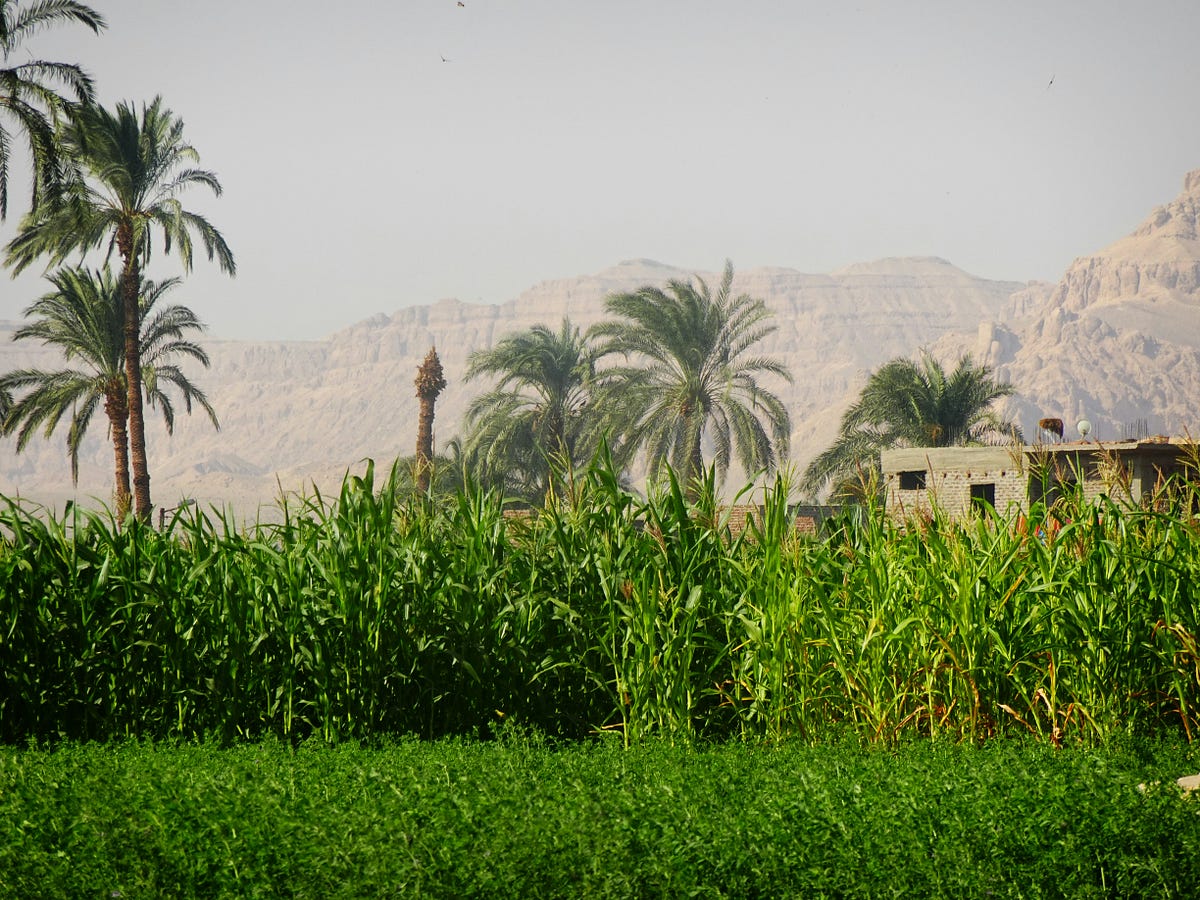
Faiyum, nourished by the Bahur Yussef Canal, was once an abundant green corridor branching from the Nile. But here’s something mind-blowing: the region was also once connected to a forgotten tributary known as the Yellow Nile, stretching west toward modern-day Chad. This placed Faiyum at a cultural and trade crossroads — linking the heart of Egypt with deeper Africa.

By 5500 BCE, human settlements were thriving here. The people of early Faiyum were among Egypt’s first farmers, potters, and basket weavers. Their innovative water systems and community planning laid the foundation for the powerful, structured society that would follow.


Photo by M abnodey on Unsplash

Shadet: The City of Sobek and Secret Power

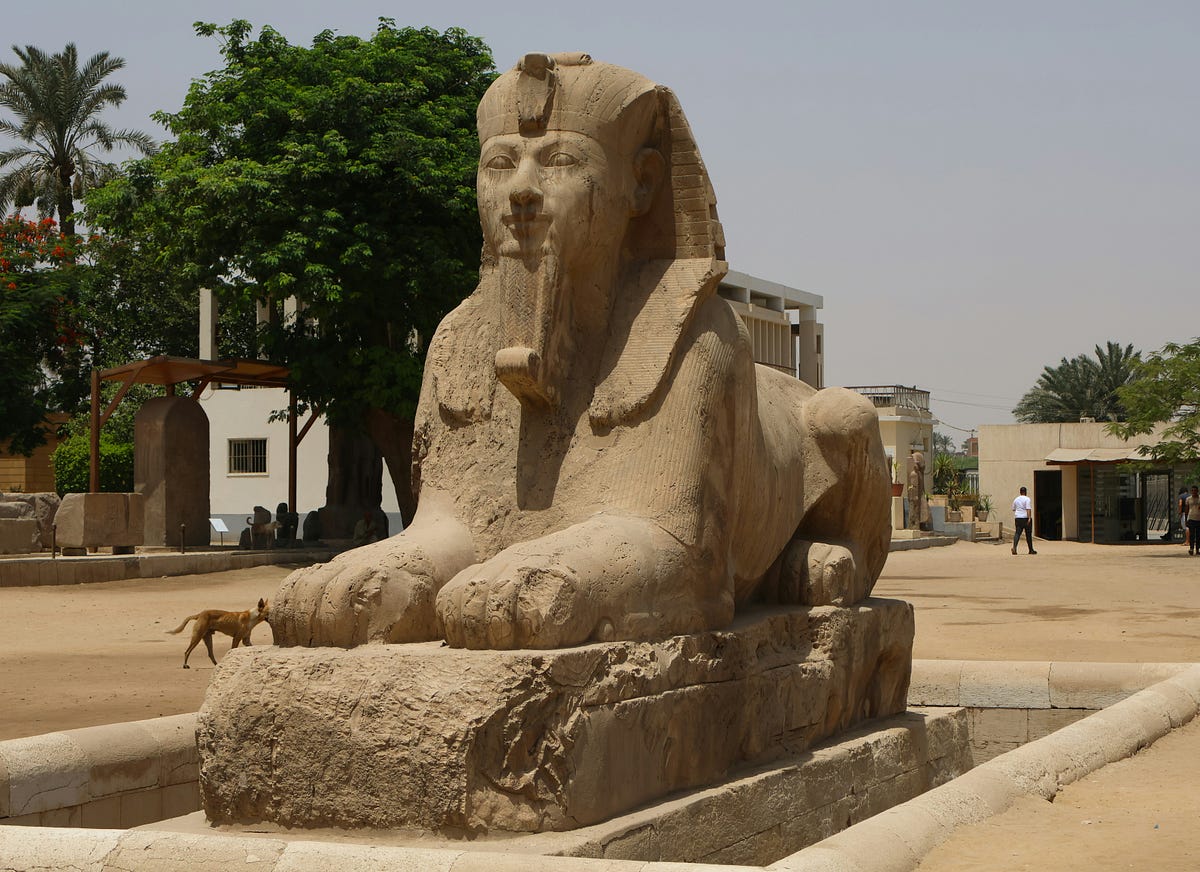
At the heart of Faiyum lay Shadet (later called Shedet, then known by the Greeks as Crocodilopolis), a city that became both a spiritual and administrative capital. Its patron deity? Sobek, the crocodile god of strength, fertility, and protection. The city was adorned with temples and sanctuaries, where priests not only bred sacred crocodiles but interpreted omens that could determine political decisions.

This is about religion and power! The priests of Sobek wielded immense influence. They had their own canonical text, known as the Book of Faiyum ( I did not know about this!), which chronicled esoteric teachings, sacred cosmology, and possibly even state secrets. This book gave the region theological independence, and its priests were not afraid to assert it. Even when it clashed with the more dominant priesthoods of Ptah in Memphis and Amun in Thebes.


Photo by M abnodey on Unsplash

Strategic Alliances and Friction with Memphis

Though Faiyum may seem remote, it was deeply intertwined with Egypt’s core. According to scholars, it is a strategic location near Memphis. It is the capital of Lower Egypt. It made it a vital supplier of grain and labor. The royal court in Memphis depended on Faiyum’s agricultural surplus, and pharaohs cemented this alliance by appointing officials to oversee taxation, irrigation, and military affairs in the region.

But tensions simmered beneath the surface. Faiyum’s nomarchs or regional governors who would often resist orders from distant rulers, and rival priesthoods clashed over temple wealth, sacred authority, and influence over the throne. The result? A slow-boiling rivalry that would, at times, erupt into open defiance.


Photo by Aleksander Stypczynski on Unsplash

The Rise of Sobenkeferu: The First Female Pharaoh

Amidst this landscape of priestly power and agricultural might emerged a ruler from Faiyum whose legacy is only now being fully appreciated Sobekneferu, the first confirmed female pharaoh of ancient Egypt.

Unlike later queens such as Cleopatra or Hatshepsut, Sbec Nefaru was born into the elite religious-political complex of Shadet. Her rule lasted only about three and a half years, but it marked a pivotal shift. She expanded the region’s temples, reinforced the worship of Sobek, and legitimized her reign with a royal title:

Sema Tawy — “Established of Crowns”

This was a political and spiritual declaration which, in my opinion, changed Kemet forever. She was the Pharaoh, the living Horus in a time of uncertainty.


Photo by Julia Kadel on Unsplash

The Book of Faiyum: Hidden Wisdom and Dangerous Knowledge

One of the most tantalizing revelations from the episode is the existence of the Book of Faiyum, a rare and mystical text referenced in Kemetic tradition. Unlike the more famous Book of the Dead or Book of Gates, the Book of Faiyum is regionally specific, centered around Sobek and the unique cosmology of the area.

This book may have allowed the Sobek priesthood to operate semi-independently from other religious centers. With sacred rites, prophetic powers, and their own theological framework, the Faiyum priests were kingmakers, and sometimes, king-breakers. This would lead to friction amoung the various priesthoods of Kemet.


Conflict, Collapse, and Legacy

Despite its prosperity, Faiyum was not immune to chaos. During the Second Intermediate Period, the region faced threats from the Hyksos, an invading dynasty from the East. Later, during the Ptolemaic and Roman periods, Faiyum became a contested zone, caught between native resistance and foreign rule.

Internal rebellions by powerful nomarchs also challenged the authority of the central state, especially during times of dynastic weakness. But these same moments helped birth new dynasties, like the 18th Dynasty, which emerged after internal resets and external turmoil.


Photo by The New York Public Library on Unsplash

Reflections: A Kingdom Between Worlds

Faiyum represents more than a regional footnote — it is a mirror reflecting the deeper soul of ancient Egypt. A place where religion, agriculture, and rebellion danced together under the desert sun. Where priestesses and pharaohs emerged from crocodile sanctuaries to challenge the old order.

And where a queen, crowned in both name and spirit, left behind a legacy that defied gender, geography, and time.


Conclusion

If ancient Egypt was a divine tapestry, then Faiyum was one of its richest and most complex threads. From waterways to sacred scrolls, from crocodile cults to political intrigue, this hidden kingdom deserves a place in our modern memory.

So the next time you think of the Nile Valley, remember the green-blooded basin of Faiyum, and the queen who rose from ancient soil.

Talk to you later.

🎧 Listen to the full episode:
 ðŸ“º The Lost Kingdom of Faiyum: Ancient Egypt’s Hidden Power Struggles & Forgotten Rulers (Podcast)

Check out these books and gifts on Amazon!

Thanks for reading! As an Amazon Associate, I get a small commission for each purchase you make after you click on my link and you shop, but it doesn’t cost you anything extra. Please use my links below!


Interested in exploring the depths of history, education, or religion through engaging articles? I’d love to contribute my expertise as a freelance writer.
Feel free to reach out at kingcamujumbe@gmail.com for collaborations or inquiries. Let’s create something impactful together!


Have You Been Hurt? When Spiritual Paralysis Feels Permanent

  A brief reflection on different kinds of paralysis, and why your hurt qualifies you for healing W e talk a lot about faith. About believin...