Showing posts with label Black History. Show all posts

Tuesday, April 15, 2025

Black Comics, Afrofuturism & Rewriting the Narrative: King Cam x Theo B Are Building the Future


In a media landscape that often sidelines Black voices. I invited Theo B. Creators like him are pushing boundaries, flipping the script, and reimagining the future. Their recent conversation — featured in my podcast entitled, “King Cam’s Ujumbe Podcast” this special episode — is more than a dialogue. It’s a cultural moment.

I believe, this isn’t just about comics or science fiction — it’s about reclaiming power through storytelling.

Let’s break down the key themes that made this interview a must-watch for creatives, thinkers, and culture lovers alike.
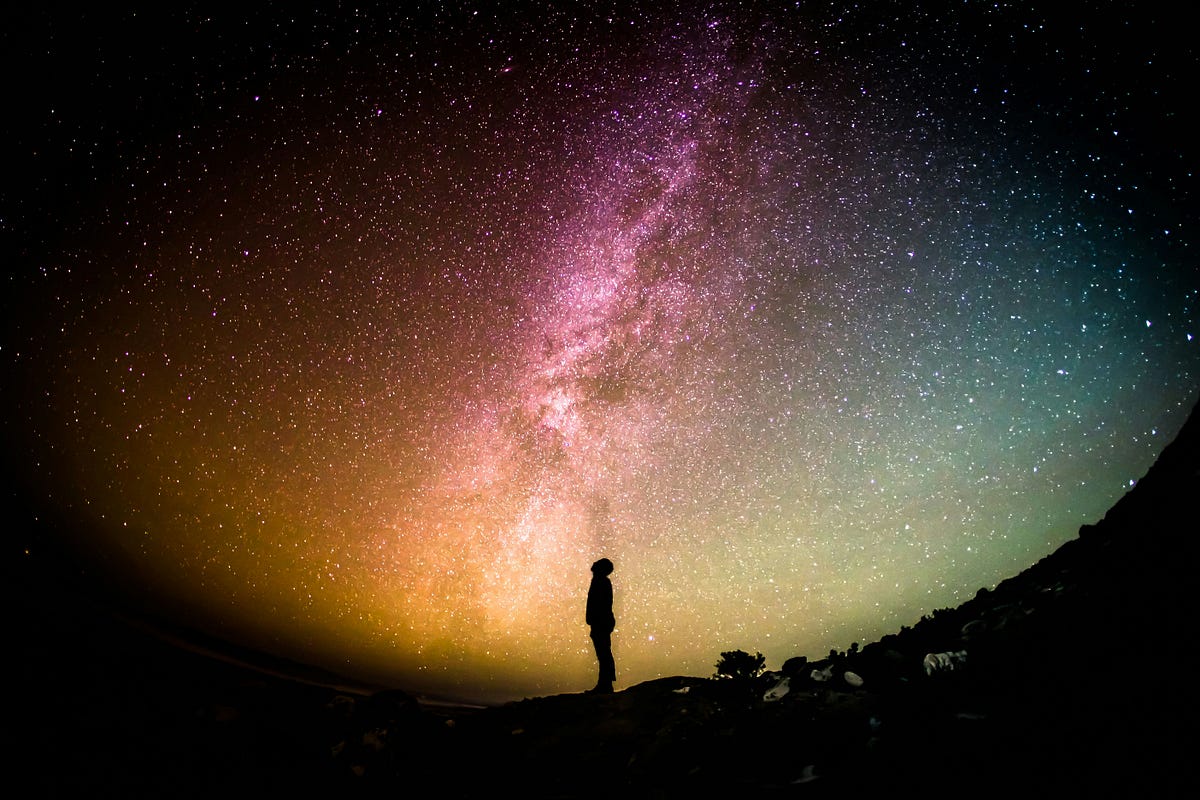

Photo by Greg Rakozy on Unsplash

Afrofuturism: Black Futures Reimagined

Theo B wastes no time defining Afrofuturism not just as an aesthetic, but as a mindset. It’s where African culture, innovation, and speculative futures converge. Think technology, spirituality, and ancestral memory all fused into worlds where Black people don’t just survive — they thrive.

Afrofuturism challenges the historical erasure of Black identity in media by positioning Blackness at the center of imaginative futures. It asks: What does liberation look like when we are no longer reacting to oppression, but creating beyond it?

As Theo puts it: 

“Afrofuturism gives us permission to dream without boundaries.”

Photo by Melyna Valle on Unsplash

The Legacy of Black Panther: More Than a Movie

The conversation naturally turns to Marvel’s Black Panther — a cultural juggernaut that opened the floodgates for Black-led, blockbuster storytelling.

King Cam reflects on what it meant to see Black royalty, brilliance, and technology on the big screen — with global resonance. But both he and Theo agree: the work isn’t done. Black Panther was a spark. Now it’s time to fan the flames.

“Wakanda was a wake-up call,” Theo says. 
“Now we’re seeing what happens when the world realizes Black imagination has always been this rich.”
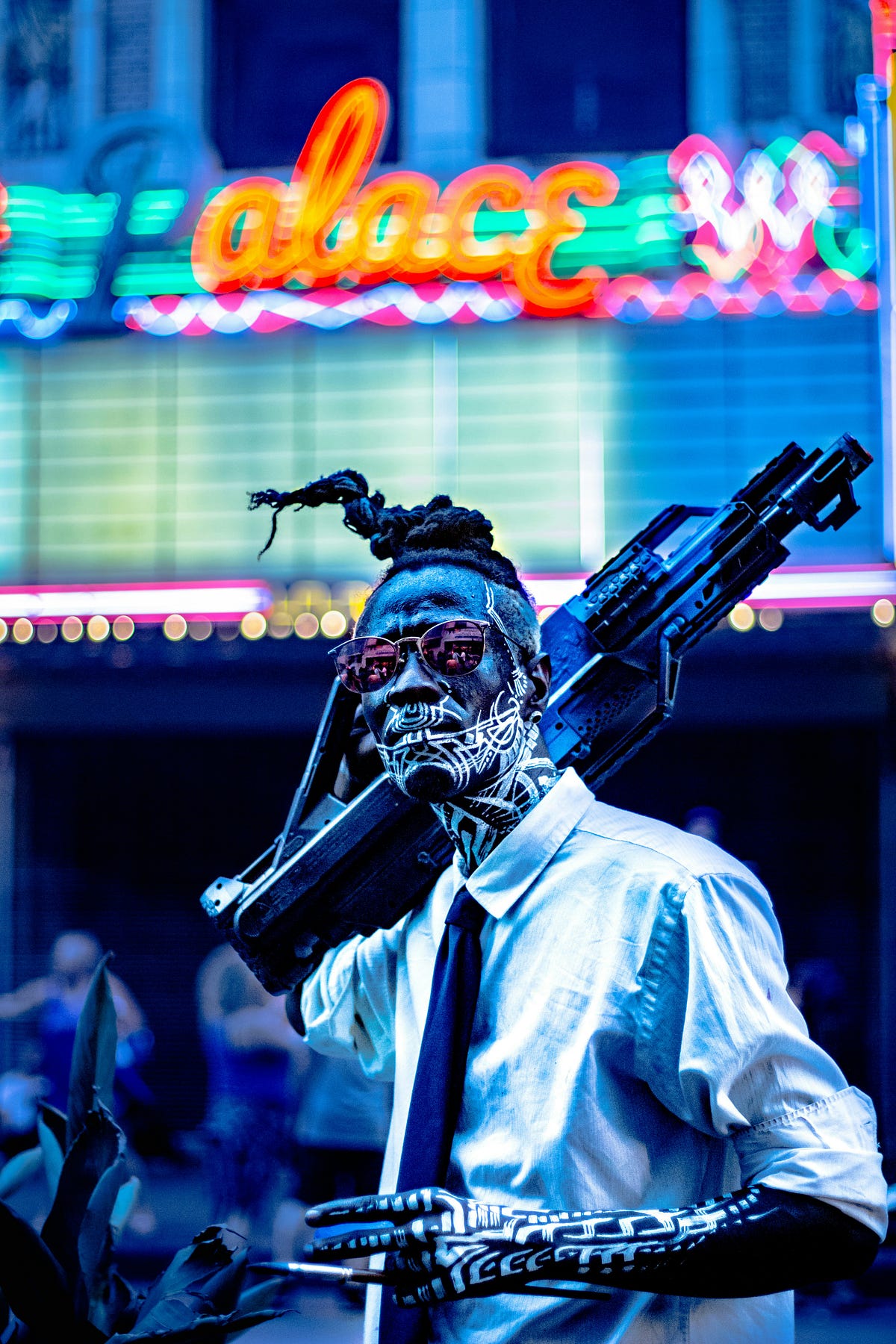
Photo by Judeus Samson on Unsplash

Independent Black Creators Are Leading the Charge

In a system where traditional comic publishers have often overlooked diverse voices, independent Black comic creators are doing what we’ve always done — building our own tables.

From digital webtoons to grassroots Kickstarters, Black indie creators are telling stories rooted in authenticity, power, and perspective. Comics like:

Harriet Tubman: Demon Slayer by David Crownson
Excellence by Brandon Thomas and Khary Randolph
Nubia: Real One from L.L. McKinney
And countless others reclaiming the superhero narrative from a distinctly Black lens

Theo B emphasizes that these creators aren’t just filling a gap — they’re establishing a new standard.

“These books don’t ask for permission,” he says. “They speak truth and push culture forward.”

Photo by Shubham Dhage on Unsplash

Why Sci-Fi & Comics Are Essential to Identity Formation

Representation isn’t just about numbers — it’s about impact. When young Black kids see themselves reflected as inventors, warriors, and leaders in sci-fi and fantasy, something powerful happens: their idea of what’s possible expands.

Theo B shares how comic books gave him confidence as a kid — not just entertainment, but identity.

“They helped me see myself outside of the struggle,” he says. 
“I saw heroes who looked like me saving the world, building civilizations. That matters.”

The genre allows for spiritual and cultural expression in ways traditional media often can’t. It’s where Afrofuturist worlds echo ancient African wisdom, and where storytelling becomes soul work.


Photo by Jeffery Erhunse on Unsplash

Black-led Platforms Are Cultural Lifelines

King Cam and Theo agree that platforms like “I Ain’t Saying, I’m Just Saying” are crucial. In a world driven by algorithms and gatekeeping, we need spaces that prioritize real conversations and cultural elevation. I then said

“These conversations aren’t just content — they’re legacy,” 
“We’re documenting the movement as it happens.”

Independent Black platforms are not only amplifying marginalized voices — they’re preserving cultural memory, sparking collaboration, and mentoring the next generation.


Photo by Mayukh Karmakar on Unsplash

Black Comic Book Versus Battle — Culture Meets Fun

In a lighter, yet equally meaningful segment, the duo face off in a “Black Comic Book Versus Battle.” Think Luke Cage vs Static Shock. Nubia vs Misty Knight. The playful exchange showcases how deep and varied Black comic history really is.

Not only is it fun, it underscores a powerful point: we have options now. Characters, stories, and heroes that reflect our many dimensions — and we’re just getting started.


Final Thoughts: The Future is Being Written

In the end, we left listeners with a clear message: 

If we want a future that reflects us, we have to create it ourselves.

Support Black storytellers. Buy indie comics. Amplify Black media. Teach your kids that they can not only be heroes — they can write them too.

This episode is more than a cultural breakdown — it’s a blueprint for creative liberation. Theo says.

“We’re not waiting for permission,” 
“We’re telling our stories, our way — and the world is listening.”

Watch the full conversation on “King Cam’s Ujumbe Podcast

This is just the beginning. The future of Black storytelling is bright — and it looks like us. 

Talk to you later…

Check out these books and gifts on Amazon!

Thanks for reading! As an Amazon Associate I get a small commission for each purchase you make after you click on my link and you shop, but it doesn’t cost you anything extra. Please use my links below!

Interested in exploring the depths of history, education, or religion through engaging articles? I’d love to contribute my expertise as a freelance writer.
Feel free to reach out at kingcamujumbe@gmail.com for collaborations or inquiries. Let’s create something impactful together
Monday, March 24, 2025

Exploring the REAL Dallas Black History with Te Erika Patterson


Photo by Zack Brame on Unsplash

Uncovering Untold Stories

In a recent conversation I had with digital content creator Te Erika Patterson shed light on the hidden gems of Dallas Black history. With an impressive background in research and storytelling, Patterson has dedicated herself to preserving the narratives often overlooked in mainstream history. And being a Dallas native I learned new things about my city.


Photo by Tachina Lee on Unsplash

Who is Te Erika Patterson?

Originally from Miami, Florida, Patterson has spent years researching and documenting Black history in various cities across the U.S. She is the founder of The Black Roots Project, an initiative dedicated to uncovering and preserving untold Black histories. Her expertise lies in using census records, historical newspapers, and interviews with elders to piece together forgotten stories.


Photo by Clay Banks on Unsplash

The Challenges of Researching Black History

One of the most significant hurdles Patterson encountered while studying Dallas Black history was the reluctance of locals to share information. Many Dallas residents were skeptical or hesitant to open up about historical events, making it difficult to gather firsthand accounts.

However, Patterson’s persistence led her to innovative research methods, such as visiting senior centers and leveraging social media to connect with community members. Through these efforts, she was able to bridge the gap between the past and present and bring hidden stories to light.


Photo by Thought Catalog on Unsplash

The Writing and Publishing Process

Patterson is no stranger to the world of publishing — she has self-published an impressive 22 books. She emphasizes the importance of building an audience before publishing, as it helps ensure that the stories reach the people who need to hear them most. Her experience with trial and error has shaped her into a seasoned author with a knack for historical storytelling.


Photo by Oladimeji Odunsi on Unsplash

A Fascinating Tale from Dallas’ Past

Among the many historical figures Patterson has researched, one of the most compelling stories is that of Jane Elkins. In the 1840s, Elkins’ name appeared in the first recorded bill of sale in Dallas County, marking her as a documented enslaved individual. However, her name surfaced again in history books for a tragic reason — she became the first Black woman executed in Texas after killing her enslaver in an act of self-defense.

Elkins’ story is a testament to the resilience and struggle of Black women in history, shedding light on the harsh realities they faced and the bravery they exhibited in the face of oppression.


Why Family History Matters

I then shared my personal experience researching my own family’s history in Dallas, reinforcing the importance of preserving ancestral records. Patterson echoed this sentiment, emphasizing how wills, census data, and oral histories play a crucial role in connecting present generations with their past.

By delving into family archives, individuals can uncover rich stories that offer insight into the struggles and triumphs of their ancestors.

The Economic and Social Evolution of Dallas’ Black Community

Patterson also highlighted the profound impact of economic changes on Black families in Dallas. As wages for Black workers increased over time, the structure of family life evolved, leading to shifts in social dynamics. Her research goes beyond oppression, offering a broader perspective on Black lifestyles and lived experiences throughout history.


Photo by Unseen Histories on Unsplash

Dallas’ Civil Rights History: An Underexplored Narrative

While much has been documented about civil rights movements in major U.S. cities, Dallas’ role in the struggle remains largely underexplored. Patterson noted that Dallas residents reacted more strongly to John F. Kennedy’s assassination than to Martin Luther King Jr.’s assassination, reflecting unique socio-political attitudes at the time. She plans to further investigate and document these lesser-known aspects of Dallas’ civil rights history in her future work.


Photo by Brett Jordan on Unsplash

What’s Next for Te Erika Patterson?

As she continues her mission to uncover untold Black histories, Patterson is already setting her sights on her next city. She plans to release another book in 2026, continuing her journey of historical preservation.

Her work serves as a powerful reminder that history is not just about the past — it’s about the stories that shape our present and future. By exploring our roots, we gain a deeper understanding of where we come from and how we can honor those who paved the way.

Final Thoughts

Te Erika Patterson’s dedication to preserving Black history is an inspiration for those seeking to understand and honor their heritage. Her research provides a voice to the silenced and a platform for the stories that deserve to be told.

If you’re interested in learning more, consider supporting her work and diving into your own family’s history — you never know what incredible stories you might uncover!

Talk to you later

Check out these books and gifts on Amazon

Thanks for reading! As an Amazon Associate, I get a small commission for each purchase you make after you click on my link and you shop, but it doesn’t cost you anything extra. Please use my links below!


Here is the video enjoy.


Interested in exploring the depths of history, education, or religion through engaging articles? I’d love to contribute my expertise as a freelance writer.
Feel free to reach out at kingcamujumbe@gmail.com for collaborations or inquiries. Let’s create something impactful together!

Tuesday, July 2, 2024

Fond Memories of the 4th: The Sights, Sounds, and Smells of a Holiday


Photo by Aaron Burden on Unsplash

Last week while I was at the doctor’s office, assisting my aunt at her follow-up appointment. While going to the truck, I saw a cousin who I haven’t seen in years! He said

You know I see you!!

That’s his jovial way of saying

I recognize you from anywhere

He was a few years older than me. We always had fun together growing up. He was there because his wife was pregnant and had a

False alarm

I was glad to see him. I then reminded him this was the time of year when we got together! Immediately our minds went back to the sights, sounds, and fond memories of the 4th!


The 4th came with a Smell

Photo by Library of Congress on Unsplash

When you walked into Momma Nita’s house (My Dad’s mother) you could smell the holiday! It was a smell laced with

Chicken
Ribs
Brisket
Potato salad
And Uncle Sam’s pipe!

And I loved it!!! The aroma was full of love and hope.


Photo by frank mckenna on Unsplash

The 4th came with a sound

The sound of joy, laughter, and conversation.

The sound of

Dominoes slammed on the table!
Dishes clinking
Aunties gossiping

The sound of

Maurice talking trash!

But the one sound I could hear above all else was

My Grand Father’s laugh!

The man would be in mid-conversation at the domino table and would holler out laughing!!!

My cousin said

Man that Cat Fish!!!

The same man who was full of laughter brought us joy when he presented to us his specialty

Cat fish!!!!

The World War II Navy Vet was methodical in his catfish cooking process, and I enjoyed it.

The food is ready and Grand Dad (knowing the crowd) he would give the shortest prayer ever it’s either

Lord thank you for this food we are about to receive for the nurishment of our bodies for Christ’ sake

Or the crowd favorite

Jesus wept

Photo by Andrae Ricketts on Unsplash

The 4th came with Sight

To come and see our loved ones in the summer was amazing. We already had summers off but to see our cousins, Aunts, Uncles, and friends all in one place was a sight to see.

As I got older with a family of my own, I see the future of my family and my community. At one time we as children went into a secluded room to take a nap. This evolved into us bringing our children to an aunt’s room for a nap. Now our youth are bringing their children to our rooms to take a nap.

Conclusion

The 4th is a mixed bag for some people, especially those who are of African descent. However, I can’t help but enjoy the sights, sounds, and smells of the holiday. These are MY fond memories of the 4th.

Talk to you later

Here are a few articles

Check out these books and gifts on Amazon!

Thanks for reading! As an Amazon Associate, I get a small commission for each purchase you make after you click on my link and you shop, but it doesn’t cost you anything extra. Please use my links below!


Interested in exploring the depths of history, education, or religion through engaging articles?
I’d love to contribute my expertise as a freelance writer. Feel free to reach out at marqdcameron@gmail.com for collaborations or inquiries. Let’s create something impactful together!

Saturday, June 22, 2024

The Black Church and Education: From whence we came and where we are traveling


Photo by Debby Hudson on Unsplash

The Black Church and Education

From whence we came and where we are traveling

Photo by Gift Habeshaw on Unsplash

Today our institutions are being attacked. Attacked on all fronts, and on every side. Society is justifying why they exist. Even those in the African American community are sharing their views on it. Someone asked

Why do we still have HBCUs?

Some would go as far as saying

The Black Church and HBCUs don’t have to do anything to offer the Black community.

Those who give such assertions may only look through a vague, looking glass of history. Using the backdrop of information spanning the last twenty-five years and Google. Not understanding the Black Church, and Historically Black Colleges and Universities, also known as HBCUs, are the fabric of African American society. This is what I know about the black church and our beloved HBCUs.


Photo by Colin Maynard on Unsplash

The Opposing Views

Booker T. Washington, an educational leader born into slavery in Franklin County, Virginia, learned about life and freedom with meager resources. After the Civil War, he acquired a job as a coal miner and later attended Hampton Institute, which gave him national notoriety. Washington’s beliefs and passive stance drew influential white supporters like Rockefeller, Carnegie, and President T, as they believed in his vision of gradual accommodation.

Washington stressed physical salvation through hard work, thrift, industry, and self-help, posing no threat to the status quo. He believed that African Americans could properly be part of society by learning a trade or craft. However, W.E.B. Du Bois, in his book “Black Reconstruction in America,” asserted that Black labor was a foundation stone of both the South and North. Du Bois, a Harvard graduate, wanted African Americans to academically compete with whites in the classics and liberal arts, advocating for political involvement to ensure everyone received the benefits of being American citizens.

Du Bois amplified the point of view of The Talented Tenth, the belief that one has to compete and rise to the occasion. Bishop Henry McNeal Turner of the AME Church wanted a quick resolution to discrimination, while Washington believed in gradual accommodation. Turner, like Du Bois, was born a freedman and had a quick and unwavering view of equality.


Photo by Bahsil Franklin on Unsplash

The Educational Impact

The educational impact of these efforts is significant. In the book “Search for Order in 1877 to 1920,” W.E.B. Du Bois describes a fundamental shift in American values. The primary focus of America after the Civil War was to rebuild the Union. This focus was an attempt to make the Black community engage in agriculture, mechanic arts, or industry. This was designed to encourage everyone in the United States to participate in rebuilding the nation after the Civil War.

There are clauses in the Land Grant Acts. Detailing how these institutions of higher learning can maintain their status. The Morrill Land-Grant Act, and the Freedmen’s Bureau designed to push these efforts. Some asserted this could prove to the majority that the newly emancipated could assimilate into society. Agricultural and Mechanical or A&M schools were established instead of schools of liberal arts and sciences.

Photo by Nqobile Vundla on Unsplash

Industrial courses such as printing, blacksmithing, plumbing, and carpentry were added to the curriculum. This was central to the furtherance of the schools and the people they served. Industrial and training schools became a vital part of church education. Offering higher-graded practical education to make life better. The same could be said about the STEM programs of the 21st century. However, time will tell.

In the South and the North, HBCUs stepped in to educate the people, their children, and their children’s children. Thus, the Reconstruction became not only a physical one but a mental reconstruction. Redeveloping the minds of the people to establish communities of their own. Individuals were using legislation such as land grants to build and develop towns. Cities such Freedman Town in Dallas, Stop Six in Ft. Worth, Houston, Richmond, and Black Wall Street in Tulsa, Oklahoma. Black cities were sprouting everywhere as the result of education.


Photo by Sir Manuel on Unsplash

The Rebuttal or Refusal

It’s a party school!

This is what my students tell me. Whenever they try to justify their reasonings as to why they are not attending. My response to them is

Any school that has the designation College or University
And has individuals between the ages of 18 and 25
That is a party school.

I would then tell them

Baylor
UT
SMU
Yale and Harvard are party schools

The issue is we have preconceived notions of ourselves that need to be addressed. (I think the same thing goes for people’s dating preferences, but I digress.)

Talk to you later


Check out these books and gifts on Amazon!

Thanks for reading! As an Amazon Associate I get a small commission for each purchase you make after you click on my link and you shop, but it doesn’t cost you anything extra. Please use my links below!


Interested in exploring the depths of history, education, or religion through engaging articles? I’d love to contribute my expertise as a freelance writer.
Feel free to reach out at marqdcameron@gmail.com for collaborations or inquiries. Let’s create something impactful together!

Wednesday, June 19, 2024

Who's Juneteenth For Anyway?


Who’s Juneteenth For Anyway?

Photo by frank mckenna on Unsplash

A friend of mine called wanting to further the discussion on Juneteenth. He liked the points that I made and would like to go further. He wanted it to be the sequel to my previous discussion on Juneteenth.


Marques Cameron’s Background

I introduced myself, mentioning my podcast, teaching career, and personal background. Including my work in high school education and focus on African history through his podcast. 

Discussion on Juneteenth

The conversation centers on the commercialization of Juneteenth, with I expressed a concern that it has lost its cultural significance due to mainstream commercialization by large retailers.

Photo by Ken kahiri on Unsplash

Cultural and Community Insights 

I discussed the importance of maintaining the cultural and community-based celebrations of Juneteenth. Emphasizing the role of local vendors, Black Owned businesses, and the uniqueness of different regional celebrations.

Masonic Involvement and Broader Themes 

The dialogue touches on the significance of Freemasonry within the Black community, the challenges of maintaining cultural traditions, and the importance of unity and community identity in the face of commercialization and external influences.

Video: Who’s Juneteenth For Anyway?


I look forward to having another conversation with my friend. The Past Grand Master Tony Hawkins of the John G. Jones Grand Lodge of California.

Talk to you later.

Interested in exploring the depths of history, education, or religion through engaging articles?
I’d love to contribute my expertise as a freelance writer. Feel free to reach out at marqdcameron@gmail.com for collaborations or inquiries. Let’s create something impactful together!

Monday, June 17, 2024

Who’s Juneteenth: It's For the Culture


Photo by Derek Lamar on Unsplash

Who’s Juneteenth

It’s for the culture

Photo by Junior REIS on Unsplash

For many years they call us in Texas

Slow

The popular reason is, ensalved Africans in Texas were the last ones to find out about the Emancipation Proclamation.

Remember in order for an Executive Order to be implemented. The State has to be under the Union. Texas at this time was still under the Confederate Banner.

Since the proclamation on January 1st, 1863. It took the Union over two years to spread the news. Once the Union Army defeated the Confederacy in Galveston. They were able to execute the Emancipation Proclamation

It’s 2024 and everyone is in on it, including Walmart. Although it’s a Texas phenomenon, it has spread across the nation. Now on June 19th, all Africans in America have their own Juneteenth celebration.

The argument now is trying to figure out

Who’s Juneteenth?
Who does it belong to?

My answer is

It’s for the culture!!!

But

Who’s it for?
Who can lay claim on it?

Here are some reasons why I know it’s for the culture!


It’s For US

What I mean by that is it is a celebration of culture. A reunion of recognition. Remember some Africans could not venture further south to reconnect with loved ones. It was not until they got the word that everyone was free. Even then there were some risks. Some could not reunite at all. Now, we all can celebrate our culture together, in our own sacred spaces.

This is not a Texas thing or a regional thing. No matter when or where, slavery affected you. At one time depending on the landing of the boat. If you are of African descent, it so happened that you landed somewhere else be it

Haiti
New York
Jamaica
Georgia
Brazil
Florida
Dominican Republic
Virginia
The Carolinas

It doesn’t matter. Slavery impacted the African culture. Now we are to celebrate the freedoms we have as one culture.

Photo by Hush Naidoo Jade Photography on Unsplash

I’m going to be honest, our brothers and sisters in the diaspora have their celebrations. From what I know, our families are welcoming us. They encourage us to come and enjoy the

Festivals,
Mardi Gras
The Carnivals

Whenever we come. So let’s not gatekeep our cultural experience from each other. Some may disagree, and that’s fine. As a Texas boy, I’m telling you Juneteenth is the for the culture!


Quick Rant

We as a people need to stop majoring in the minors. We have other issues to deal with than to assert our authority over something that was established in one place over a hundred years ago. That’s it let’s continue.

Photo by Hu Chen on Unsplash

It’s for the Ancestors

They were the ones who had to endure things we could never imagine. They felt the pain and anguish of chattel slavery in the North and the South. This celebration is for them. They established this event not knowing how widespread it would become. Now we are celebrating it in

San Diego
Los Angeles
Denver
Baltimore
Waxahachie
The DMV
Chicago
Detroit

(If I missed a city type it for me!)

Photo by Ian Kiragu on Unsplash

Wherever Africans in America are, we are doing it for the ancestors. The ones that looked into the future with hope. Our ancestors were the ones who planted shade trees of wisdom, and knowledge. Knowing they would not sit under them.

Now that we know who it’s for.

How to celebrate it

My answer is however you feel. It can be with

Food
Dance
Education
Music
A parade
Drums
A Slam Poetry Session

But most importantly

BBQ!!!

Conclusion

I know someone may disagree, or want something deep or profound. Not today, the word Juneteenth was a merge between the day and the culture for which it represents. In its simplicity there is profundity. All I am going to say is

It’s for the culture!

Talk to you later.

Check out these books and gifts on Amazon!

Thanks for reading! As an Amazon Associate I get a small commission for each purchase you make after you click on my link and you shop, but it doesn’t cost you anything extra. Please use my links below!


Interested in exploring the depths of history, education, or religion through engaging articles? I’d love to contribute my expertise as a freelance writer. Feel free to reach out at marqdcameron@gmail.com for collaborations or inquiries. Let’s create something impactful together!

Have You Been Hurt? When Spiritual Paralysis Feels Permanent

  A brief reflection on different kinds of paralysis, and why your hurt qualifies you for healing W e talk a lot about faith. About believin...